Bitmain Antminer
 IceRiver
 Whatsminer
 Canaan Avalon
 Goldshell
 Solo Miner
 Elphapex
 Volcminer
 Jasminer
 Pinecone
 Bitcoin
 Dogecoin
 Aleo
Aleo
 Kaspa
Kaspa
 ALPH
ALPH
 Nexa
Nexa
 ETC
ETC
 CKB
CKB
 Dash
Dash
 Kadena
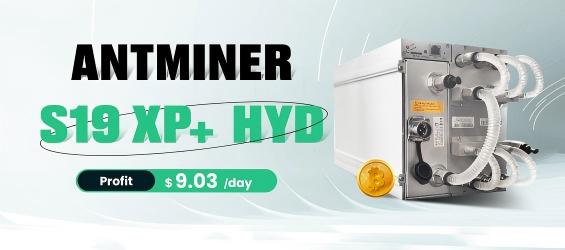










Quick Verdict: Is Mining Profitable in 2026?
Short answer: Yes — for the right operators. The Q1 2026 difficulty reset (-7.76% on March 21) created a brief window. That window is closing.
If you have efficient hardware (≤12 J/TH) and cheap electricity (≤$0.05/kWh): You are in the profitability sweet spot. Deploy now, before hashrate rebuilds.
If you’re running S19-era hardware (30+ J/TH): You have 6–12 months before difficulty renders you structurally unprofitable. This guide outlines exactly what to do.
If you’re paying above $0.07/kWh: Mining does not pencil out at current BTC prices. Look for lower power contracts or reconsider.
Bottom line: The miners who survive the next cycle are the ones who upgrade now and lock in power agreements. This guide covers everything you need to make that decision.
Quick Facts: 2026 Mining Numbers That Matter
| Metric | Value |
|---|---|
| BTC price | ~$74,000 |
| Network difficulty | ~133.79T (dropped 7.76% on March 21, 2026) |
| Network hashrate | ~938 EH/s |
| Daily BTC mining issuance | ~437 BTC |
| Best current miner efficiency | 9.5 J/TH (S23 Hyd) |
| Worst viable efficiency | ~18 J/TH |
| Electricity break-even (Antminer S21 XP+ Hyd) | ~$48,000 BTC |
| Electricity break-even (Antminer S23 Hyd) | ~$41,000 BTC |
Data Source: f2pool
Introduction
The Bitcoin mining industry in 2026 is not for the passive investor.
Since the last halving in April 2024, daily miner revenue has dropped from roughly 900 BTC to ~437 BTC — a 51% reduction in daily issuance. Combined with a 30%+ rise in network hashrate over the past 12 months, margins have compressed across the board. Q1 2026 saw a genuine capitulation event: miners who couldn’t cover power costs at $0.05+/kWh shut down, and the network just recorded its largest difficulty drop in recent history.
For those who survived, there is now a window.
This guide is a complete operational reference: current profitability math, difficulty forecast through 2027, a verified ASIC comparison, and plain-language recommendations for every operator scenario. No fluff. No “crypto is the future” rhetoric. Just numbers and decisions.
All data in this article has been verified against manufacturer specifications (Bitmain, MicroBT, Canaan) and network data sources (Blockchain.com, CoinMarketCap).
Part 1: Current Mining Profitability — April 2026 Baseline
Why the March Difficulty Drop Matters
On March 21, 2026, network difficulty fell 7.76% — one of the largest single adjustments in Bitcoin’s history. This happened because Q1 2026 saw significant hashrate go offline as:
- Miners on higher-cost power shut down amid compressed margins
- Relocation following policy shifts in several jurisdictions took hashrate offline temporarily
The practical effect: if you are running efficient hardware today, you are mining at a below-average difficulty. That advantage is temporary. Historical pattern: hashrate rebuilds within 4-8 weeks of a major difficulty drop, and difficulty follows.
The window to act is now.
Daily Profitability by Hardware Generation
BTC ~$74,000 | Difficulty ~133.79T | Pool fee 2% | Electricity at $0.05/kWh
| Miner | Hashrate | Power | Efficiency | Daily Revenue | Electricity Cost | Daily Profit | Verdict |
|---|---|---|---|---|---|---|---|
| Antminer S23 Hyd | 580T | 5,510W | 9.5 J/TH | ~$13.76 | ~$6.61 | ~$7.15 | ✅ Excellent |
| Antminer S21 XP+ Hyd | 480-500T | 5,280W | 11 J/TH | ~$12.30 | ~$6.34 | ~$5.96 | ✅ Strong |
| Antminer S21 XP Hyd | 473T | 5,676W | 12 J/TH | ~$12.00 | ~$6.81 | ~$5.19 | ✅ Viable |
| Antminer S21+ Hyd | 395T | 5,925W | 15 J/TH | ~$10.00 | ~$7.11 | ~$2.89 | ⚠️ Marginal |
| Antminer S21 Hydro | 335T | 5,360W | 16 J/TH | ~$8.49 | ~$6.43 | ~$2.06 | ⚠️ Thin |
| Whatsminer M61 (MicroBT) | 190T | 3,600W | 18.9 J/TH | ~$4.82 | ~$4.32 | ~$0.50 | ⚠️ Thin |
| Antminer S19K Pro | 120T | 2,760W | 23 J/TH | ~$3.04 | ~$3.31 | -$0.27 | ⚠️ Electricity-sensitive |
| Antminer S19j Pro | 104T | 3,268W | 31.4 J/TH | ~$2.64 | ~$3.92 | -$1.28 | ⚠️ Electricity-sensitive |
The Antminer S19K Pro and Antminer S19j Pro are both unprofitable at $0.05/kWh commercial rates — but they serve different markets. At $0.05/kWh, the S19K Pro loses ~$0.27/day (barely negative) and the Antminer S19j Pro loses ~$1.28/day. However, for operators with free or near-free electricity (hydro excess, flare gas, industrial by-product power), both machines eliminate the electricity variable entirely. With only the machine cost to recover:
- Antminer S19K Pro (120T, $285-$375/unit): generates ~$4.02/day at free power → payback in 2 months
- Antminer S19j Pro (104T, $540-$770/unit): generates ~$3.04/day at free power → payback in 5 months
The Antminer S19K Pro delivers 15% more hash than the Antminer S19j Pro at a similar price point, making it the preferred choice for subsidized-power operators looking to maximize hash per dollar.
Key framing: hardware efficiency (J/TH) only matters as much as your electricity cost. For premium power markets ($0.05+/kWh), efficiency is everything — buy Antminer S21 XP+ Hyd. For subsidized or free power markets, low machine cost + high hash output = maximum leverage.
Daily Profitability by Electricity Rate
BTC ~$74,000 | Difficulty ~133.79T
| Electricity | S23 Hyd | S21 XP+ Hyd | S21 XP Hyd | S21+ Hyd | M61 |
|---|---|---|---|---|---|
| $0.03/kWh | ~$8.98 | ~$8.11 | ~$7.59 | ~$5.29 | ~$2.11 |
| $0.04/kWh | ~$7.98 | ~$7.11 | ~$6.59 | ~$4.29 | ~$1.51 |
| $0.05/kWh | ~$6.98 | ~$6.11 | ~$5.59 | ~$3.29 | ~$0.50 |
| $0.06/kWh | ~$5.98 | ~$5.11 | ~$4.59 | ~$2.29 | ~-$0.11 |
| $0.07/kWh | ~$4.98 | ~$4.11 | ~$3.59 | ~$1.29 | ~-$0.91 |
| $0.10/kWh | ~$2.48 | ~$1.61 | ~$1.09 | ~-$1.21 | ~-$2.51 |
Electricity rate is the single most important variable in mining profitability. Hardware efficiency matters, but a miner with expensive power will always lose to a less efficient miner with cheap power.
Part 2: Difficulty Forecast 2026-2027
Historical Context
| Period | Difficulty | Event |
|---|---|---|
| Jan 2025 | ~95T | Pre-halving high |
| Apr 2024 | ~83T | Post-halving reset |
| Jan 2026 | ~120T | Hashrate rebuilding |
| Mar 2026 | ~133T | Pre-adjustment peak |
| Mar 21, 2026 | ~133.79T | Difficulty drop (-7.76%) |
| Apr 2026 | ~133.79T | Current |
Forward Projections
| Period | Difficulty (Base) | Difficulty (Bull Case) | Notes |
|---|---|---|---|
| Q2 2026 | ~136T | ~140T | Hashrate rebuilds |
| Q3 2026 | ~145-155T | ~160T | Summer hashrate migration |
| Q4 2026 | ~155-165T | ~175T | Difficulty cycle peaks |
| Q2 2027 | ~175-195T | ~210T | If BTC holds above $70K |
What this means practically:
At $0.05/kWh and difficulty 155T, the Antminer S21 XP+ Hyd earns approximately $4.15/day (vs $5.96 today). That is still profitable — but the Antminer S19k Pro ($0.77 today) would be underwater.
The operators who need to act now are those running hardware that becomes unprofitable at 150T+ difficulty.
Part 3: Best ASIC Miners for 2026 — Full Comparison
All specifications from official manufacturer data. Pricing from Apexto direct distributor pricing as of Q1 2026 — contact for real-time quotes.
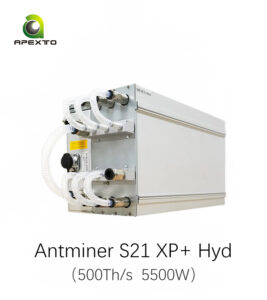
Top Pick: Antminer S21 XP+ Hyd
| Spec | Detail |
|---|---|
| Hashrate | 480-500 TH/s |
| Power draw | 5,280W |
| Efficiency | 11 J/TH |
| Cooling | Hydro |
| Price range (Apexto)* | $8680 |
| Daily profit ($0.05/kWh) | ~$5.96 |
| Payback period | 18-25 months |
| Best for | Large-scale new deployments |
The S21 XP+ Hyd is the current benchmark for large-scale operations. 31% more efficient than the base S21 Hydro (16 J/TH), and hydro cooling means consistent performance in any climate. At $0.05/kWh, this machine generates enough daily revenue to service its CAPEX within 2 years under current difficulty conditions.
The efficiency improvement over the S21 XP+ Hyd vs the S21 XP Hyd (11 vs 12 J/TH) is smaller. If budget is the constraint, the S21 XP Hyd is the better value.
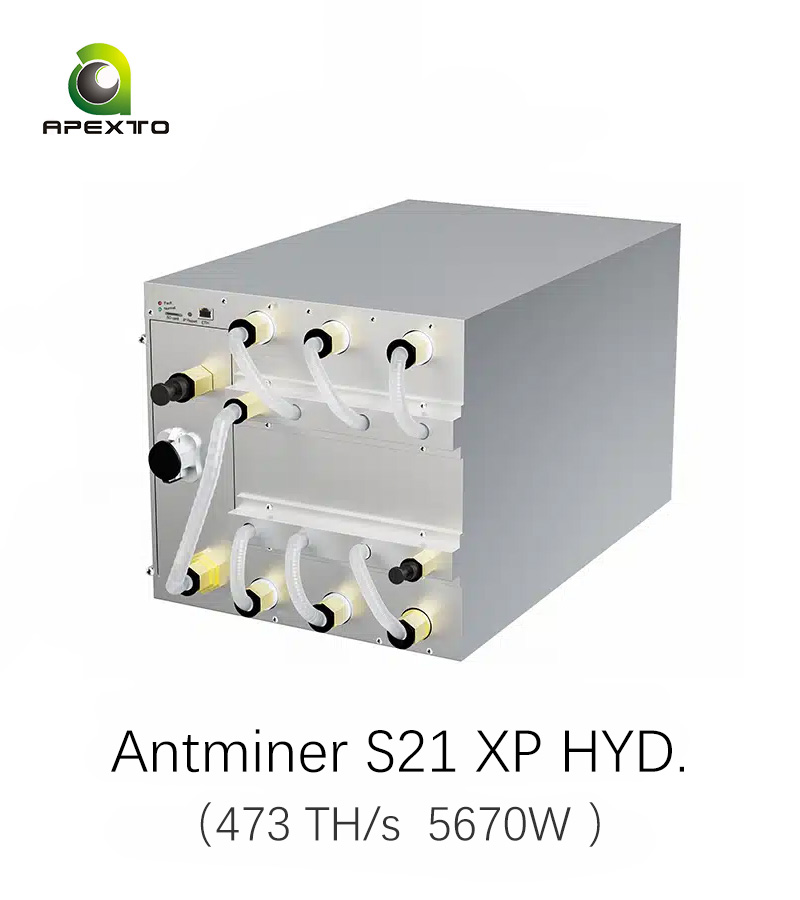
Best Value: Antminer S21 XP Hyd
| Spec | Detail |
|---|---|
| Hashrate | 473 TH/s |
| Power draw | 5,676W |
| Efficiency | 12 J/TH |
| Cooling | Hydro |
| Price range (Apexto)* | $6090 |
| Daily profit ($0.05/kWh) | ~$5.19 |
| Payback period | 21-31 months |
| Best for | 500kW-5MW operations |
The sweet spot for most commercial operations. The efficiency-to-cost ratio is the best in the Bitmain lineup. Deploy 1MW of these and you are running 205 units generating roughly 97 TH/s each — manageable density with a clear path to ROI.
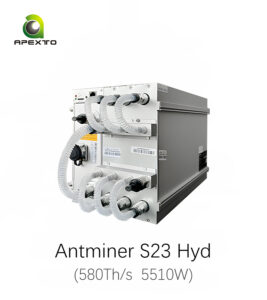
Best New Generation: Antminer S23 Hyd
| Spec | Detail |
|---|---|
| Hashrate | 580 TH/s |
| Power draw | 5,510W |
| Efficiency | 9.5 J/TH |
| Cooling | Hydro |
| Price range (Apexto)* | $13,740 |
| Daily profit ($0.05/kWh) | ~$13.01 |
| Payback period | 22-31 months |
| Best for | Long-term operators, 3+ year horizon |
The first mass-produced ASIC below 10 J/TH. Bitmain’s engineering achievement, but the CAPEX is significant. At $0.05/kWh, the payback is 22-30 months. At $0.04/kWh, that drops to roughly 18-24 months. The math works best with cheap power locked in.
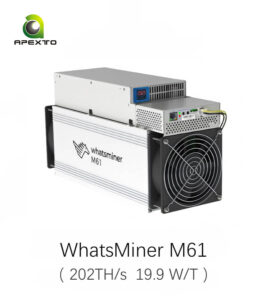
Best Air-Cooled: WhatsMiner M61
| Spec | Detail |
|---|---|
| Hashrate | 190 TH/s |
| Power draw | 3,600W |
| Efficiency | 18.9 J/TH |
| Cooling | Air (2 fans) |
| Price range (Apexto)* | $1,460-1,520 |
| Daily profit ($0.05/kWh) | ~$0.50 |
| Payback period | 13-16 months* |
| Best for | Small scale, air-cooled preference |
*At $0.05/kWh the margin is razor thin — only viable with volume (10+ units) or slightly lower power costs. No cooling infrastructure required, which reduces upfront total cost of deployment.
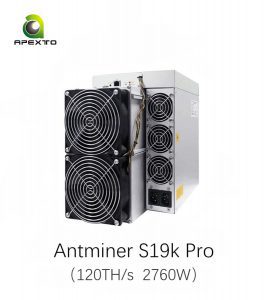
Antminer S19K Pro
| Spec | Detail |
|---|---|
| Hashrate | 120 TH/s |
| Power draw | 2,760W |
| Efficiency | 23 J/TH |
| Cooling | Air (4 fans) |
| Noise level | 75 dB |
| Price range (Apexto)* | $285-375 |
| Daily profit ($0.05/kWh) | ~-$0.27 (barely negative) |
| Daily profit (free power) | ~$3.04 |
| Payback (free power) | 10-14 months |
| Best for | Operators with free/subsidized electricity |
The S19K Pro sits in a practical sweet spot: significantly cheaper than the S21 series, meaningfully more efficient than the older S19j Pro (23 vs 31.4 J/TH), and delivering 120T of hash at a machine cost comparable to older S19 hardware.
At commercial electricity ($0.05+/kWh), the S19K Pro is barely unprofitable — not a machine for paid-power operators. But for operators with access to free, subsidized, or industrial by-product power (hydro overflow, flare gas, behind-the-meter solar), the S19K Pro is one of the strongest CAPEX-to-hash conversions available at its price tier. At free power, 120T generating ~$3.04/day pays back the machine cost in 3-5 months.
The 23 J/TH efficiency is also notably better than the S19j Pro’s 31.4 J/TH — 27% more efficient, at a similar price point. For subsidized-power operators comparing these two, the S19K Pro wins clearly.
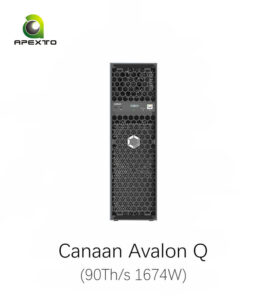
Best Entry-Level: Avalon Q
| Spec | Detail |
|---|---|
| Hashrate | 90 TH/s |
| Power draw | 1,674W |
| Efficiency | 18.6 J/TH |
| Cooling | Air |
| Price | Contact Apexto |
| Daily profit ($0.05/kWh) | ~$1.32 |
| Best for | Testing mining, small spaces, lower noise |
90 TH/s at 18.6 J/TH is not world-changing, but it is the lowest barrier to entry in the current market. Quieter than most alternatives, compact, and manageable solo. Useful for proving the concept before scaling up.
💡 Apexto Friendly Reminder: Apexto stocks the complete lineup of Bitmain Hydro, WhatsMiner Hydro, and Avalon Hydro series miners, as well as comprehensive water-cooling infrastructure kits—serving as your one-stop provider for both mining hardware and cooling solutions. Contact Apexto sales for current availability and volume pricing →
Part 4: ASIC Comparison Table — All Current Models
| Model | Hashrate | Efficiency | Power | Cooling | Price (Apexto)* | Daily Profit ($0.05/kWh) | Payback** |
|---|---|---|---|---|---|---|---|
| Antminer S23 Hyd | 580T | 9.5 J/TH | 5,510W | Hydro | $13,740 | ~$13.01 | 22-31 mo |
| Antminer S23 Hyd 3U | 1,160T | 9.5 J/TH | 11,020W | Hydro | $7,000-8,000 | ~$14.30 | 18-24 mo |
| Antminer S21 XP+ Hyd | 480-500T | 11 J/TH | 5,280W | Hydro | $8,680 | ~$5.96 | 18-25 mo |
| Antminer S21 XP Hyd | 473T | 12 J/TH | 5,676W | Hydro | $6,090 | ~$5.19 | 21-31 mo |
| Antminer S21+ Hyd | 395T | 15 J/TH | 5,925W | Hydro | $2,350-3,170 | ~$2.89 | 28-40 mo |
| Antminer S21 Hydro | 335T | 16 J/TH | 5,360W | Hydro | $3,800 | ~$2.06 | 25-38 mo |
| Whatsminer M61 | 190T | 18.9 J/TH | 3,600W | Air | $1,460-1,500 | ~$0.50 | 13-16 mo*** |
| Antminer S19K Pro | 120T | 23 J/TH | 2,760W | Air (4 fans) | $285-315 | -$0.27 ($0.05/kWh) / +$3.04 (free power) | 10-14 mo (free power) |
| Canaan Avalon Q | 90T | 18.6 J/TH | 1,674W | Air | $1,380 | ~$1.43 | TBD |
| Antminer S19j Pro | 104T | 31.4 J/TH | 3,268W | Air | $285-540 | -$1.28 ($0.05/kWh) / +$2.64 (free power) | 13-18 mo (free power) |
*Prices fluctuate daily — contact Apexto for real-time quotes.
**Assumes BTC ~$74,000, difficulty ~133.79T, $0.05/kWh electricity.
***M61 ROI highly sensitive to electricity rate — only viable at $0.05/kWh or below with volume.
Part 5: Action Plan by Operator Type
If you’re paying for electricity
Your clock is ticking. Miners at 20+ J/TH efficiency at $0.05+/kWh generate less daily revenue than they cost to run. Difficulty is rising — every month you wait, the gap widens.
| Option | What it means | When to act |
|---|---|---|
| Upgrade to efficient hardware | CAPEX for S21 XP+ Hyd tier or equivalent | Now |
| Reduce scale | Cut electricity exposure while you figure out your plan | Before next difficulty adjustment |
| Exit | Miners with commercial power and outdated hardware will be forced out eventually | Better before than after |
The math: At $0.05/kWh, an efficient miner earns roughly $5.96/day while a legacy miner (31 J/TH) loses $1.28/day. Across 100 legacy units, that is a $724/day or ~$21,720/month gap in lost margin. Difficulty does not wait.
If your electricity is free or near-free
The calculation here is completely different. There is no electricity cost to cover — only machine cost.
At $285-315/unit, a legacy-class miner still generates meaningful daily revenue against its purchase price. Machine-only payback in 3-8 months at current BTC prices is a perfectly reasonable return. The math of spending $6,000+ on new hardware when your power is free does not add up. Hold what you have.
Bottom line
There is no universal “upgrade” or “hold” answer. Your electricity rate is the single variable that decides everything. If you are paying commercial rates and running outdated hardware, the window to act is now. If your power is free, you are playing a completely different game.
Running S21 Series?
You are in the viable range. Focus on what you can control.
| Priority | Action |
|---|---|
| 1 (Critical) | Lock in power contracts at $0.05/kWh or below |
| 2 (High) | Plan hardware expansion now while difficulty is still at its post-drop low |
| 3 (Medium) | Evaluate S23 Hyd for any new capacity — 9.5 J/TH is the long-term standard |
| 4 (Ongoing) | Monitor difficulty monthly — rebuild should start within weeks |
Planning a New Deployment?
Conditions that need to be met before committing capital:
| Requirement | Minimum | Ideal |
|---|---|---|
| Electricity rate | ≤$0.05/kWh | ≤$0.04/kWh |
| Hardware efficiency | ≤15 J/TH | ≤11 J/TH |
| Scale | 200kW | 1MW+ |
| Deployment timeline | Within 12 months | Within 6 months |
If you do not have at least the minimum on all three, the numbers will be difficult to justify at current BTC prices.