- Which cooling system matches your miner brand (Antminer vs Whatsminer—they’re NOT interchangeable)
- How to size your system for 1-12 miners vs 100+ industrial deployments
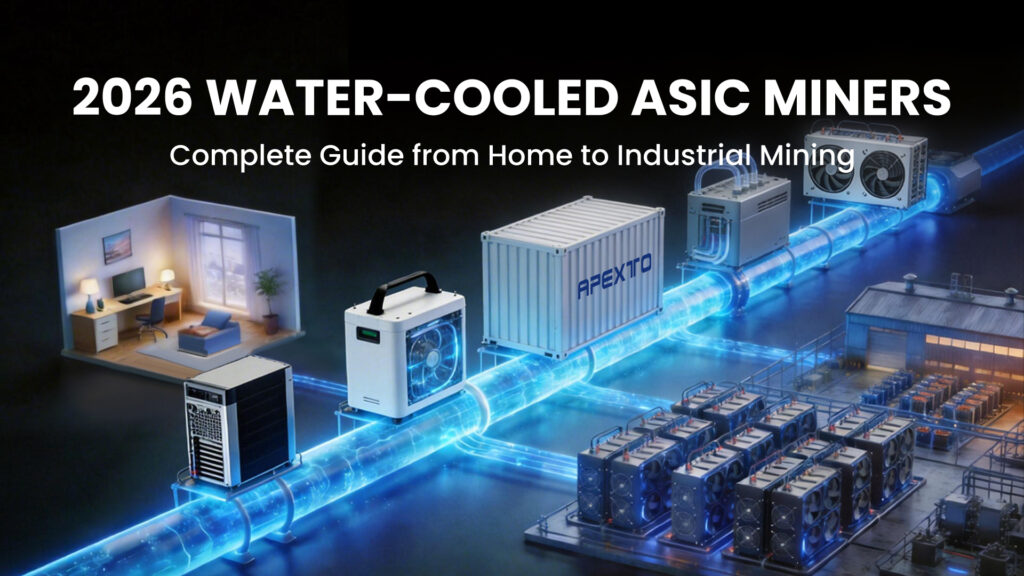
- The three system types: integrated cabinets, modular split systems, and containerized solutions
- Real thermal capacity calculations for Antminer S21 Hydro, Antminer S23 Hydro, Whatsminer M63S, and Whatsminer M73S
- Climate considerations and heat recovery opportunities
⚡ Quick Answer: Start by identifying your miner brand (Bitmain Antminer Hydro → AP-H/AP-E series; MicroBT Whatsminer Hydro → AP-H…-M series), then match your miner count to the capacity table in Section
Introduction: Your Miner Is Only Half the Equation
Factory water-cooled ASIC miners—Bitmain Antminer Hydro and MicroBT Whatsminer Hydro models—can’t cool themselves. Think of it this way: your miner is the engine, but the cooling system is the radiator, pump, and coolant combined. Get it wrong, and even the most efficient 580 TH/s Antminer S23 Hyd will overheat, throttle, or fail prematurely.
Here’s the truth most buyers discover too late: the cooling system decision is often harder than choosing the miner itself.
Section 1: The Two Questions That Determine Everything
1.1 Which Miner Brand Do You Have?
| Miner Brand | Product Series | Compatible Cooling Systems |
|---|
| Bitmain Antminer Hydro | S19 Hyd, S21 Hyd, S21+ Hyd, S23 Hyd | |
| MicroBT Whatsminer Hydro | M53S, M63S, M73S | |
| Canaan Avalon Hydro | Avalon A1566HA 2U | |
1.2 How Many Miners Are You Running?
💡 Sizing Tip: Always specify cooling systems with 15–20% more thermal rejection capacity than your miners’ peak thermal output.
Section 2: Understanding the Three System Types
Type 1: Integrated Cooling Cabinet (Plug-and-Play)
Type 2: Modular Split System (Scalable)
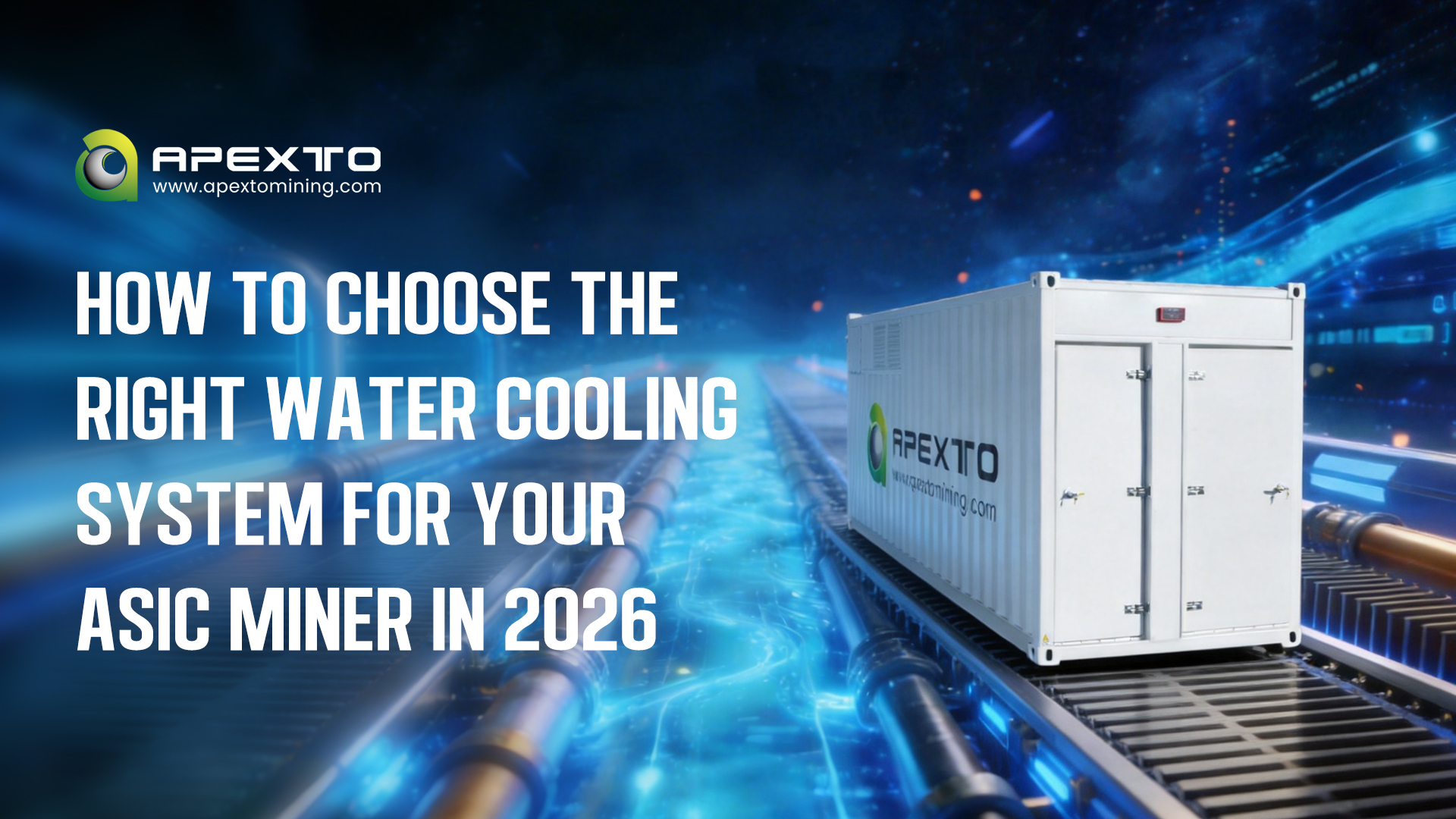
Type 3: Containerized System (Turnkey Industrial)
- What it is: Shipping container pre-fitted with miners, full cooling infrastructure, certified electrical systems.
- Best for: Large-scale mining farms (100+ miners), rapid deployment, remote locations.
| Product | Capacity | Power Rating | Certifications | Lead Time |
|---|
| AP-HC20-A210 | 210 Antminer | ~1.2 MW | CCS/CSA/CE | 15-25 days |
| AP-HC40-A364 | 364 Antminer | ~2.1 MW | CCS/CSA/CE | 15-25 days |
| AP-HC40-A480 | 480 Antminer | ~2.6 MW | CCS/CSA/CE | 15-25 days |
| AP-HC20-M160 | 160 Whatsminer | ~1.6 MW | CSA/CE | 15-25 days |
| AP-HC40-M240 | 240 Whatsminer | ~2.4 MW | CSA/CE | 15-25 days |
Section 3: Cooling System Selection by Miner Brand
3.1 For Antminer (Bitmain) Hydro Miners
| Specification | Value |
|---|
| Capacity | 12 Antminer units |
| Cooling Type | Integrated (CDU + pump + dry cooler) |
| Installation | Rack miners, connect power and network |
| Thermal Capacity | ~66 kW at full load |
| Specification | Value |
|---|
| Capacity | 28 Antminer units per unit (stackable) |
| Cooling Type | Split CDU design |
| Installation | Professional installation recommended |
| Max Configuration | 16+ units with dual stacked systems |
3.2 For Whatsminer (MicroBT) Hydro Miners
⚠️ Important: Do not install Whatsminer miners in Antminer-specific cooling cabinets.
AP-H20-M — Home / Small Warehouse System (up to 20 Whatsminer units)
| Specification | Value |
|---|
| Capacity | 20 Whatsminer units (M53S/M63S/M73S) |
| Cooling Type | Integrated CDU + pump + dry cooler |
| Thermal Capacity | ~200 kW at full load |
Section 4: Key Factors That Should Influence Your Decision
4.1 Ambient Temperature and Climate
A dry cooler rated for 64 kW at 25°C may only deliver 48 kW at 40°C ambient.
| Climate Zone | Summer Ambient | Derating Factor | Recommended Headroom |
|---|
| Temperate | 25–30°C | 5–10% | 15% |
| Hot | 30–35°C | 10–15% | 20% |
| Tropical/Desert | 35–45°C | 20–30% | 25–30% |
4.2 Noise Environment
| Location Type | Recommended System | Noise Considerations |
|---|
| Residential | AP-H12, AP-H20-M | Integrated cabinets are quieter. Best for garages, basements. |
| Industrial/Warehouse | Hydro Container systems | Industrial fans designed for performance over quiet operation. |
4.3 Installation Capability
| System Type | Complexity | Timeline | Professional Required? |
|---|
| AP-H12 / AP-H20-M | Low | Same-day | No |
| AP-E28 | Low | Same-day | No |
| Container systems | Low (on-site) | 1–2 days commissioning | Included |
Section 5: Heat Recovery — The Hidden Economic Advantage
Water-cooled systems produce usable hot water (typically 45–65°C at full load). If your facility has heating needs, this thermal output can offset other energy costs.
| Application | System Compatibility | Annual Savings Potential |
|---|
| Building heating | All systems | $8,000–15,000 (heating season) |
| Greenhouse heating | All systems | Year-round crop production |
| Industrial process heat | Container systems (2+ MW thermal) | $300,000–500,000 |
Section 6: Making Your Selection — The Decision Chain
Follow this three-step decision chain to select the ideal water cooling system for your ASIC hydro miners.
Step 1 — Identify Your Miner Brand
Start by confirming the manufacturer of your liquid‑cooled mining hardware, as compatibility is brand‑specific.
- Bitmain Antminer Hydro Series
- MicroBT Whatsminer Hydro Series
- Canaan Avalon Hydro Series
Step 2 — Match System Capacity to Your Fleet Size
Choose a solution based on the total number of miners in your deployment:
- Small‑scale setup (1–12 units): Compact integrated cooling cabinet
- Mid‑scale deployment (12–28 units): Stackable modular cooling system
- Large‑scale farm (100–210 units): 20ft containerized cooling solution
- Industrial‑scale operation (240–480 units): High‑density 40ft container system
Step 3 — Align With Your Facility & Deployment Goals
Finalize your system type based on site infrastructure, installation speed, and long‑term scalability:
- Simple plug‑and‑play installation: Integrated cooling cabinets
- Flexible, warehouse‑scale expansion: Modular stackable systems
- Turnkey industrial deployment with rapid setup: Containerized cooling solutions
Conclusion: The Cooling System Makes or Breaks Your Investment
The water cooling system is what makes your miner investment productive—or turns it into an expensive space heater.
Choose the system that’s:
1. Built for your miner (Antminer vs Whatsminer—no exceptions)
2. Sized for your fleet (with 15–20% headroom for climate and growth)
3. Appropriate for your facility (noise, electrical, installation capability)
Quick Reference Table
| System | Miner Brand | Capacity | System Type | Best For |
|---|
| AP-H12 | Antminer | 12 units | Integrated cabinet | Home/garage mining |
| AP-E28 | Antminer | 28+ units (stackable) | Modular split system | Scaling warehouse ops |
| AP-HC20-A210 | Antminer | 210 units | 20ft container | Medium-scale farms |
| AP-HC40-A364 | Antminer | 364 units | 40ft container | Large industrial |
| AP-HC40-A480 | Antminer | 480 units | 40ft container | Maximum scale |
| AP-H20-M | Whatsminer | 20 units | Integrated cabinet | Home/warehouse |
| AP-HC20-M160 | Whatsminer | 160 units | 20ft container | Medium-scale farms |
| AP-HC40-M240 | Whatsminer | 240 units | 40ft container | Large industrial |
 Bitmain Antminer
 IceRiver
 Whatsminer
 Canaan Avalon
 Goldshell
 Solo Miner
 Elphapex
 Volcminer
 Jasminer
 Pinecone
 Bitcoin
 Dogecoin
 Aleo
Aleo
 Kaspa
Kaspa
 ALPH
ALPH
 Nexa
Nexa
 ETC
ETC
 CKB
CKB
 Dash
Dash
 Kadena