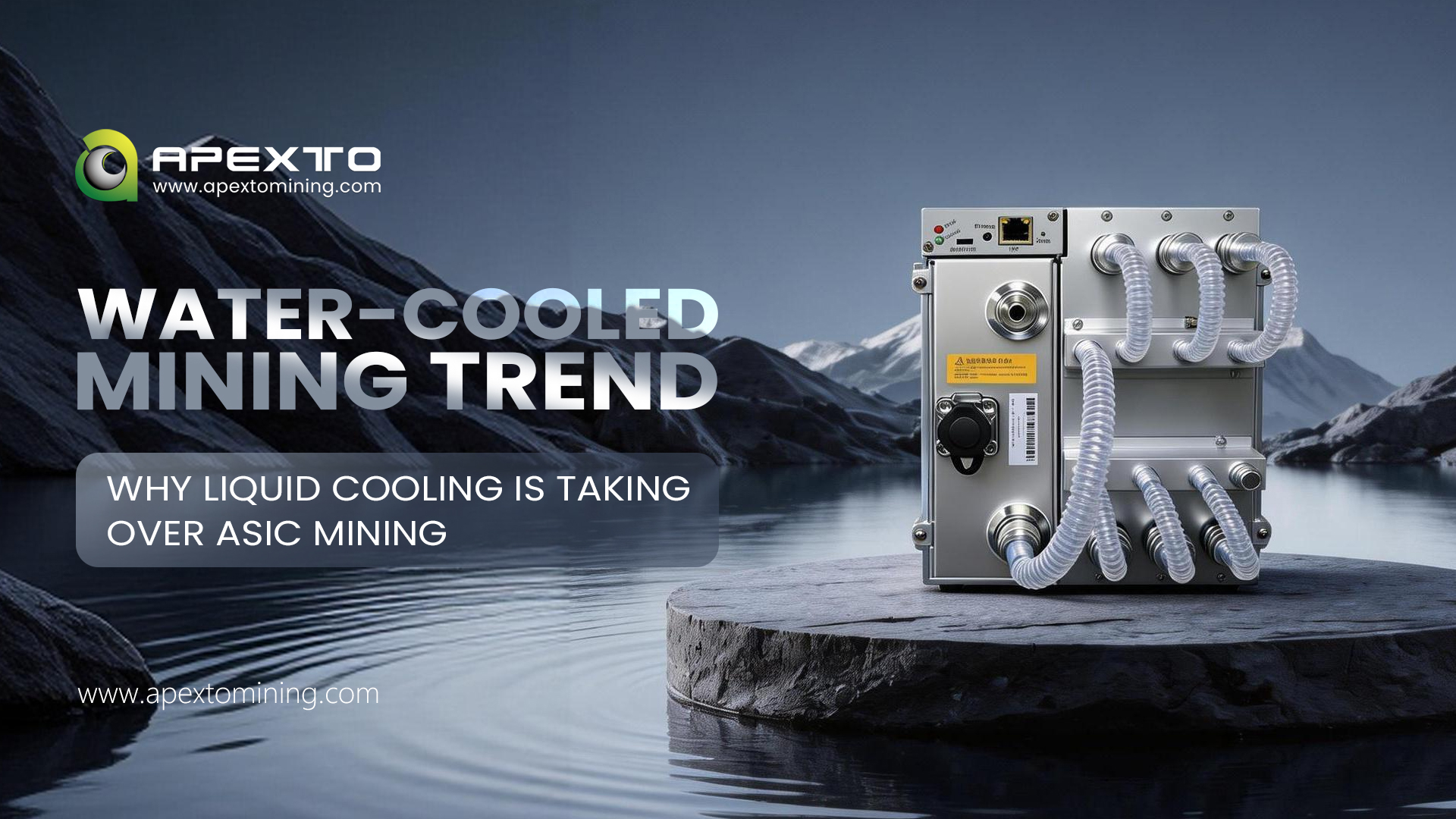
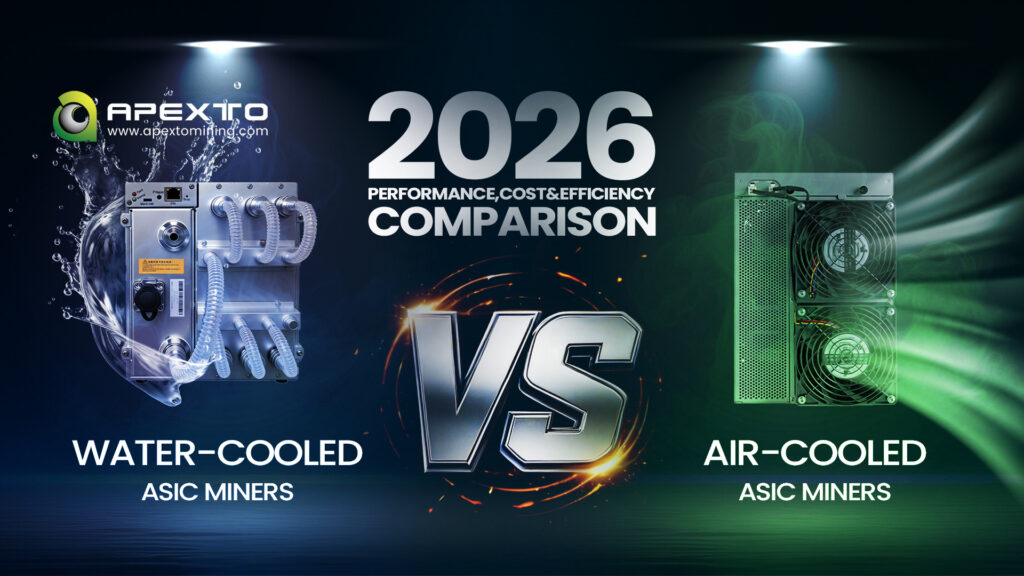
In 2026, one trend is impossible to ignore: water-cooled miners are rapidly replacing air-cooled systems across the global mining industry.
This shift is not driven by hype—it is driven by economics, regulation, and infrastructure evolution. What started as an optimization strategy for large-scale mining farms is now becoming the default architecture for serious operators.
The key question is no longer “Should I consider water-cooling?”
It is now: “How soon do I need to transition?”
Section 1: The Core Driver — Efficiency Becomes Survival
The most fundamental trend driver is simple: efficiency now determines survival.
After multiple halving cycles, mining profitability depends on how efficiently you convert electricity into hash power.
PUE Is Redefining Mining Standards
| Cooling Type | Typical PUE | Industry Impact |
|---|
| Air-Cooled | 1.4–1.5 | High energy waste |
| Water-Cooled | 1.02–1.2 | Near-optimal efficiency |
This shift is critical because:
- Energy costs now account for 70%–85% of total mining expenses
- Even a 10–20% efficiency improvement can determine profitability
- Large-scale farms are optimizing at the infrastructure level—not just hardware
Trend Insight:
Water-cooling is not just more efficient—it is becoming the baseline expectation for competitive mining.
Section 2: Industrialization of Mining Infrastructure
Mining in 2026 is no longer a “garage operation” industry—it is a data center business.
From Hobby to Infrastructure
Modern mining operations increasingly resemble:
- Hyperscale data centers
- AI compute facilities
- High-density server environments
And these industries have already standardized on liquid cooling.
Why This Matters
- Air-cooling cannot support high-density deployments
- Water-cooling enables 2–4x more hash power per square foot
- Infrastructure efficiency now impacts capital expenditure (CAPEX)
Trend Insight:
Water-cooled mining is part of a broader shift toward data-center-grade mining infrastructure.
Section 3: Regulation Is Forcing the Transition
Governments are increasingly targeting energy-intensive industries, and crypto mining is at the center of that discussion.
Key Regulatory Pressures
- Energy efficiency standards for data centers
- Carbon reporting requirements
- Noise and heat emission restrictions
- Grid stability compliance
Why Water-Cooling Wins
- Lower total energy consumption
- Reduced heat waste
- Near-silent operation
- Easier compliance with ESG frameworks
Trend Insight:
Water-cooling is quickly becoming a compliance strategy, not just a performance upgrade.
Section 4: Reliability and Predictability Are Now Critical
Mining profitability depends on uptime stability, not just peak performance.
Air-Cooled Limitations
Water-Cooled Advantages
- Stable chip temperatures
- No airflow dependency
- Sealed systems reduce contamination
| Factor | Air-Cooled | Water-Cooled |
|---|
| Downtime Risk | Medium–High | Low |
| Temperature Stability | Variable | Constant |
| Maintenance Frequency | High | Low |
Trend Insight:
The industry is shifting from maximum performance → predictable performance.
Section 5: Economics — The Real Reason Behind the Trend
Let’s be direct: this trend is driven by ROI, not technology hype.
Short-Term vs Long-Term Cost
| Category | Air-Cooled | Water-Cooled |
|---|
| Upfront Cost | Lower | Higher |
| Electricity Cost | Higher | Lower |
| Maintenance | Higher | Lower |
| Lifespan | Shorter | Longer |
ROI Reality
Over a 3–5 year cycle:
- Electricity savings compound significantly
- Downtime reduction improves revenue stability
- Hardware lasts longer and retains resale value
Conclusion:
Water-cooling often results in lower total cost of ownership (TCO) despite higher initial investment.
Section 6: Market Signals — The Trend Is Already Confirmed
The strongest validation comes from the market itself:
Trend Insight:
This is not an emerging trend—it is already an industry transition phase.
Section 7: Who Needs to Adapt (And When)
Small-Scale Miners
- Air-cooling still viable
- Transition not urgent
- Focus on learning and capital efficiency
Mid-Scale Operators (50–200 units)
- Transition planning should start now
- Hybrid setups may be optimal
Large-Scale Mining Farms (200+ units)
- Water-cooling is becoming mandatory
- Infrastructure decisions should prioritize liquid systems
Section 8: Product Comparison (Trend Perspective)
| Miner Type | Cooling | Efficiency | Density | Trend Status |
|---|
| Traditional ASIC | Air | Medium | Low | Declining |
| Advanced Air ASIC | Air | Improved | Medium | Transitional |
| Hydro ASIC | Water | High | High | Dominant |
| Immersion Systems | Liquid | Very High | Very High | Emerging |
Conclusion: From Trend to Standard
Water-cooled mining is no longer just a trend—it is becoming the new standard for serious operations.
The shift is driven by five irreversible forces:
- Efficiency pressure
- Industrial-scale infrastructure
- Regulatory compliance
- Reliability requirements
- Economic optimization
Miners who adapt early gain a cost and scalability advantage. Those who delay may find themselves priced out of the market.
 Bitmain Antminer
 IceRiver
 Whatsminer
 Canaan Avalon
 Goldshell
 Solo Miner
 Elphapex
 Volcminer
 Jasminer
 Pinecone
 Bitcoin
 Dogecoin
 Aleo
Aleo
 Kaspa
Kaspa
 ALPH
ALPH
 Nexa
Nexa
 ETC
ETC
 CKB
CKB
 Dash
Dash
 Kadena