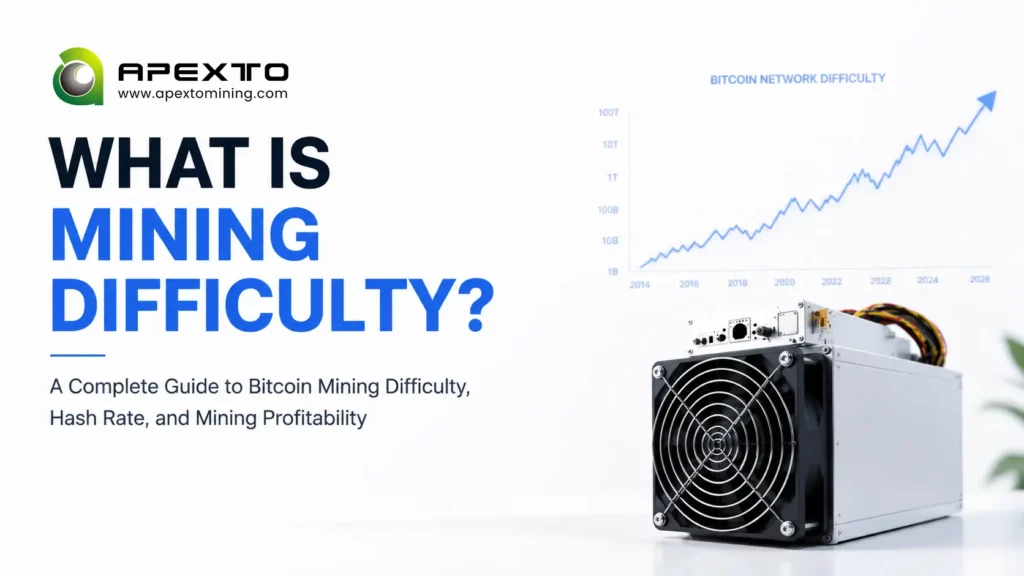
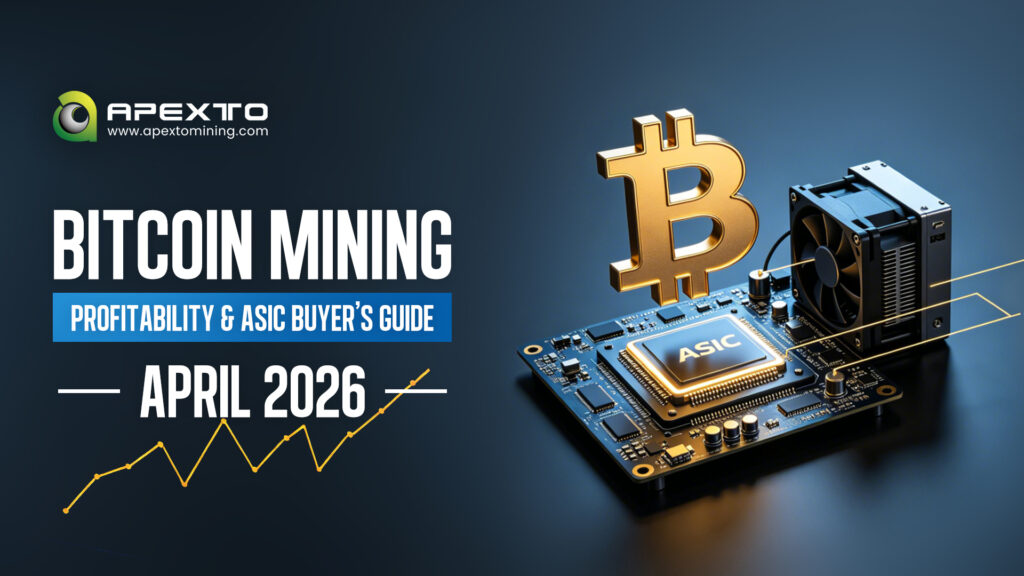
The cryptocurrency mining industry is undergoing a major transformation in 2026. Following a significant drop in Bitcoin mining difficulty and a decline in global hash rate, the market has entered a phase of structural adjustment. At the same time, privacy-focused cryptocurrencies such as Zcash have seen explosive growth, attracting renewed attention from both retail and institutional investors.
For new miners, this creates both opportunity and uncertainty. Choosing the right coin to mine—and the right hardware to support it—is no longer a simple decision. It directly impacts profitability, risk exposure, and long-term returns.
In this guide, we analyze six major mineable cryptocurrencies—Bitcoin (BTC), Dogecoin (DOGE), Zcash (ZEC), Ethereum Classic (ETC), Nervos (CKB), and Dash (DASH)—and provide clear recommendations on mining strategies and suitable ASIC miners for each.
Bitcoin (BTC): Stability Comes at a Cost
Bitcoin remains the most secure and widely recognized cryptocurrency. However, mining BTC in 2026 is increasingly challenging. Mining difficulty remains high, and production costs often exceed market prices, putting pressure on miners’ profitability.
The mining ecosystem is also highly concentrated, with large mining pools controlling a significant share of the network hash rate. This makes it difficult for small or independent miners to compete.
For those who still want to mine Bitcoin, high-performance machines like the Antminer S23 Hydro are essential. Its water-cooling system improves heat dissipation and reduces noise, while delivering industry-leading efficiency.
However, Bitcoin mining is best suited for large-scale operations with access to low-cost electricity. For beginners, it may not be the most practical entry point.
Dogecoin (DOGE): Accessible and Efficient Through Merge Mining
Dogecoin has evolved far beyond its origins as a meme coin. In 2026, it benefits from merge mining with Litecoin, allowing miners to earn both DOGE and LTC simultaneously without additional computational cost.
This significantly improves mining efficiency and makes Dogecoin one of the most accessible options for newcomers.
Machines like the Antminer L11 are specifically designed for Scrypt-based mining and provide stable performance with relatively manageable entry costs. Combined with faster block times and a more flexible mining ecosystem, DOGE remains a strong choice for beginners.
That said, the market has become increasingly professionalized. ASIC miners are now the standard, and GPU or CPU mining is no longer competitive.
Zcash (ZEC): The Rise of Privacy Mining
Zcash stands out as one of the most important privacy-focused cryptocurrencies. Its use of zero-knowledge proofs allows users to shield transaction data, offering a level of privacy unmatched by most other blockchains.
In 2025, ZEC experienced dramatic price growth, reflecting a broader shift toward privacy-centric assets. This trend continues into 2026, making Zcash one of the most attractive mining opportunities.
The Antminer Z15 Pro, optimized for the Equihash algorithm, delivers strong performance and efficiency, making it a popular choice among miners targeting ZEC.
Compared to Bitcoin, Zcash mining is less centralized and still allows some participation from GPU miners, although ASIC devices are increasingly dominant.
For miners seeking higher upside potential, Zcash represents a compelling option.
Ethereum Classic (ETC): A Reliable Option for GPU Miners
Ethereum Classic has maintained its commitment to Proof-of-Work, making it a natural destination for miners displaced by Ethereum’s transition to Proof-of-Stake.
Its Ethash algorithm favors memory-intensive computation, which allows GPUs to remain competitive. This makes ETC one of the most accessible coins for smaller-scale miners.
At the same time, ASIC miners like the Antminer E11 are beginning to play a larger role, offering improved efficiency and performance.
ETC may not offer explosive growth, but it provides stability and a relatively low barrier to entry—an appealing combination for beginners.
Nervos (CKB): High Potential in an Emerging Ecosystem
Nervos CKB represents a new generation of blockchain infrastructure, designed to support scalability and interoperability through a layered architecture.
Although still developing, CKB has gained attention for its innovative design and long-term potential. For miners, this translates into an opportunity to enter a relatively underdeveloped market with less competition.
The Antminer K7, optimized for the Eaglesong algorithm, offers strong hash rate performance and energy efficiency, making it a leading choice for CKB mining.
However, as with any emerging project, there are risks. Market adoption and ecosystem growth will play a critical role in determining long-term profitability.
Dash (DASH): Privacy and Payment Efficiency Combined
Dash is one of the earliest cryptocurrencies to focus on privacy and fast payments. Features like InstantSend and PrivateSend give it a unique position in the digital payments space.
Mining Dash requires specialized ASIC hardware such as the Antminer D9, which is optimized for the X11 algorithm. The market is highly competitive, and GPU mining is no longer viable.
While Dash offers solid technology and a clear use case, it is better suited for experienced miners who can operate efficiently at scale.
Which Crypto Should You Mine in 2026?
Choosing the right cryptocurrency depends on your budget, technical experience, and risk tolerance.
- For beginners: Dogecoin and Ethereum Classic offer the easiest entry points, with lower complexity and more flexible hardware requirements.
- For intermediate miners: Zcash and CKB provide a balance between risk and reward, with strong growth potential.
- For advanced miners: Bitcoin and Dash remain viable options, but require significant investment and operational efficiency.
From a profitability perspective, emerging and mid-tier coins currently offer better opportunities than Bitcoin, especially for smaller operators.
Key Factors to Consider Before You Start
Before investing in mining, it is essential to evaluate several key variables:
- Electricity cost: The most critical factor affecting profitability
- Hardware efficiency: Measured in hash rate per watt
- Market conditions: Price volatility and network difficulty
- Scalability: Ability to expand operations over time
A successful mining strategy is not just about choosing a coin—it’s about optimizing the entire operation.