

Bitcoin Solo Mining Miracle: 70 TH/s Miner Finds Block Against 300-Year Odds

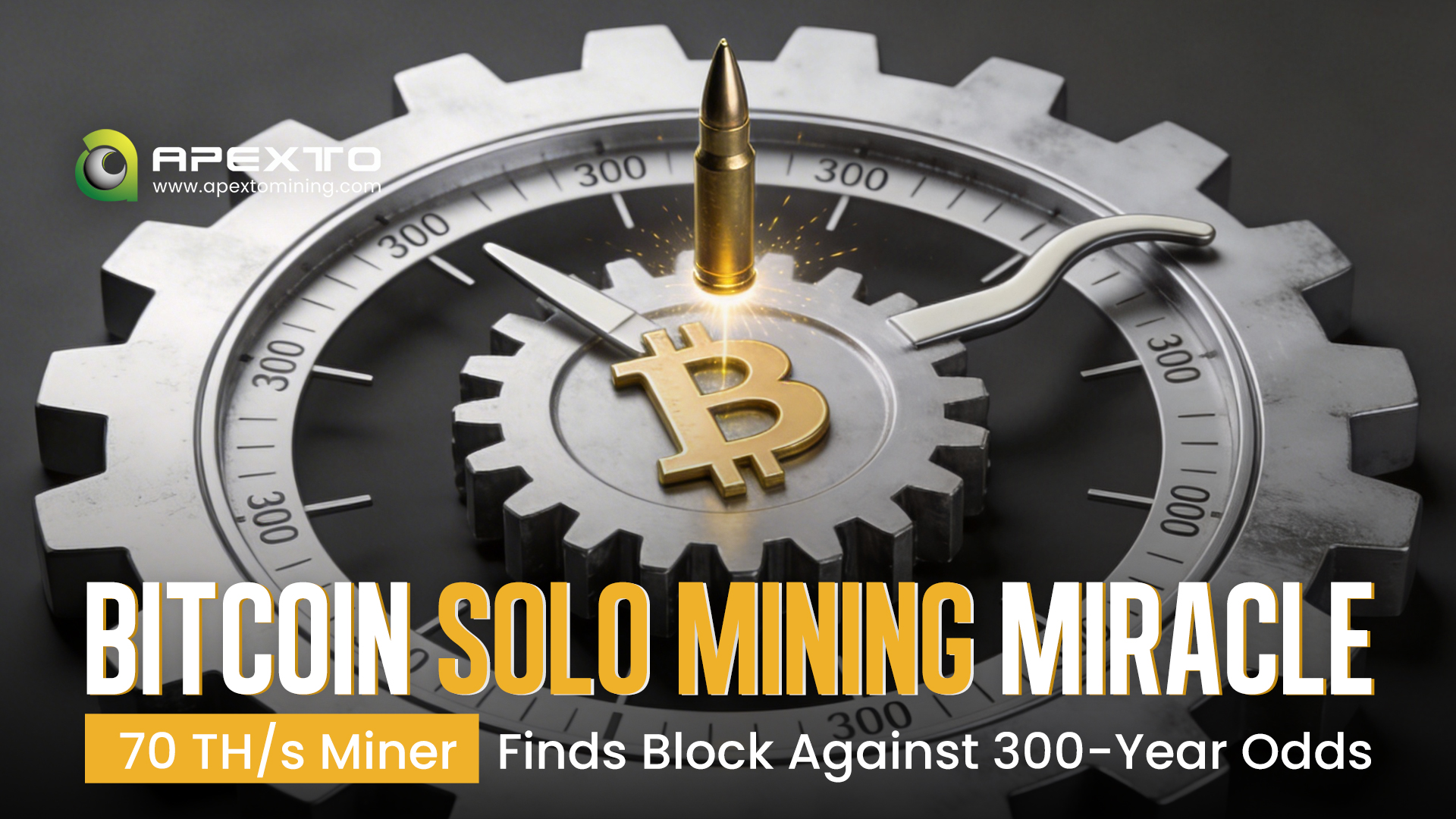
What Happened: The Lucky Miner Story
In early 2026, a solo miner using CKPool with only 70 TH/s of hashpower found a Bitcoin block. The reward:- Block subsidy: 3.125 BTC
- Transaction fees: ~0.08 BTC
- Total: ~3.2 BTC (worth ~$215,000)
Why This Matters for You
Bitcoin Network Hashrate: 1,000,000,000 TH/s
This Miner's Hashrate: 70 TH/s
Network Share: 0.000007%
Expected Time to Find 1 Block: ~300 years
The Real Math: What You’re Up Against
Your success depends entirely on your hashpower:| Your Hashpower | Expected Time to Find 1 Block | Daily Odds |
|---|---|---|
| 10 TH/s (1 miner) | ~2,000 years | 1 in 3,000,000 |
| 70 TH/s (lucky miner) | ~300 years | 1 in 300,000 |
| 100 TH/s (1-2 miners) | ~200 years | 1 in 210,000 |
| 1 PH/s (5-10 miners) | ~20 years | 1 in 21,000 |
| 5 PH/s (25-50 miners) | ~4 years | 1 in 4,200 |
| 10 PH/s (50-100 miners) | ~2 years | 1 in 2,100 |
The Opportunity Window
Bitcoin mining difficulty adjusts every 2,016 blocks (~2 weeks). As the network grows, difficulty increases—but so does Bitcoin’s price historically. The sweet spot: Getting in before the next major difficulty adjustment, with efficient hardware that can run profitably long-term.Why Most Solo Miners Fail (And How to Avoid It)
The Typical Failure Pattern
Month 1: Excitement
├─ Buy cheap/used equipment
├─ Skip proper electrical setup
├─ Underestimate cooling needs
└─ Expect quick returns

Month 3: Reality hits
├─ Equipment fails (no warranty)
├─ Electricity bills shock
├─ Hashrate unstable
└─ No blocks found

Month 6: Exit
├─ Total loss: $10,000-30,000
├─ Equipment sold at 50% loss
└─ "Mining is a scam" narrative
The Three Fatal Mistakes
Mistake #1: Cheap Hardware Used/outdated miners seem like a bargain until:- Hashboards fail (replacement cost: $2,000-5,000)
- Power supplies die ($300-800 each)
- Efficiency degrades (older miners use 2x more power)
- No warranty support
- Dedicated 220V circuits prevent fires
- Cooling systems protect your investment
- Stable internet avoids downtime
- Monitoring catches problems early
- 12+ months of electricity costs reserved
- Emergency fund for repairs
- Patience to ride out difficulty adjustments
How to Position Yourself for Success
Step 1: Start With the Right Hardware
Don’t gamble with equipment. Your miner is your lottery ticket—make sure it’s a good one. What to look for:| Factor | Why It Matters | Target |
|---|---|---|
| Efficiency (J/TH) | Lower = less electricity | <30 J/TH |
| Hashrate (TH/s) | Higher = better odds | As high as budget allows |
| Reliability | Uptime = more attempts | New with warranty |
| Noise level | Home mining viability | <75 dB for residential |
| Resale value | Exit option | Popular models only |
Step 2: Secure Your Power Advantage
Electricity is your #1 ongoing cost. Every $0.01/kWh savings = 15-20% more profit margin. Power cost comparison (per miner, monthly):| Electricity Rate | Monthly Cost | Annual Cost |
|---|---|---|
| $0.15/kWh (residential US) | $1,080 | $12,960 |
| $0.10/kWh (industrial) | $720 | $8,640 |
| $0.05/kWh (stranded/renewable) | $360 | $4,320 |
| $0.02/kWh (flared gas/hydro) | $144 | $1,728 |
- Negotiating industrial rates
- Relocating to low-cost regions
- Pairing with renewable sources
- Pool mining instead
Step 3: Build for Longevity
Think years, not months. Minimum viable setup:| Component | Investment | Why |
|---|---|---|
| Quality ASIC miners | $10,000-30,000 | Your core asset |
| Professional electrical | $1,000-3,000 | Safety + reliability |
| Cooling system | $500-2,000 | Protects hardware |
| Monitoring setup | $200-500 | Catch issues early |
| 12 months electricity reserve | $5,000-15,000 | Survive dry spells |
| Total | $16,700-50,500 | Realistic minimum |
CKPool vs Traditional Pool: Which Is Right for You?
How They Compare
| Feature | CKPool (Solo) | Traditional Pool |
|---|---|---|
| Reward | 100% if YOU find block | Small share of EVERY block |
| Payout | Rare, large (lottery) | Frequent, small (steady) |
| Variance | Extreme | Low |
| Best for | Patient, well-capitalized | Cash flow focused |
Our Recommendation
Start with a hybrid approach:80% hashpower → Traditional pool (covers electricity costs)
20% hashpower → CKPool/solo (lottery upside)
- Pool earnings offset operating costs
- Solo portion gives you a shot at the big prize
- You stay in the game longer
- Best of both worlds
Alternative Paths to Mining Success
Path 1: Altcoin Solo Mining
Bitcoin isn’t your only option. Some coins have much lower difficulty:| Coin | Network Hashrate | Viable Solo At | Why Consider |
|---|---|---|---|
| Kaspa (KAS) | ~500 PH/s | 500 GH/s+ | Growing ecosystem |
| Litecoin (LTC) | ~1 PH/s | 100 MH/s+ | Established, liquid |
| Dogecoin (DOGE) | ~1 PH/s | 100 MH/s+ | Merged with LTC |
Path 2: Scale Gradually
Instead of going all-in immediately:Phase 1: 1-2 miners (learn operations, test setup)
Phase 2: 5-10 miners (scale what works)
Phase 3: 20+ miners (serious operation)
- Limits initial risk
- Lets you learn without massive losses
- Builds confidence and expertise
- Capital efficient
Path 3: Join a Pool, Then Reassess
There’s no shame in pool mining. Many successful miners started in pools, then transitioned to solo as they scaled. Pool benefits:- Immediate cash flow
- Learn the business
- Build capital
- No pressure
- 5+ PH/s hashpower
- Proven operations expertise
- Cheap power secured
- Capital reserves built
Why Equipment Quality Matters More Than You Think
The False Economy of Cheap Miners
Let’s do the math on a “bargain” purchase: Used S19 (2021 model):- Purchase price: $2,500
- Efficiency: 30 J/TH
- Expected lifespan: 6-12 months (already used)
- Electricity cost (3 years): $13,000
- Total 3-year cost: $15,500+
- Purchase price: $6,000
- Efficiency: 17.5 J/TH
- Expected lifespan: 5+ years (warranty)
- Electricity cost (3 years): $7,500
- Total 3-year cost: $13,500
What You Get With Quality Hardware
- Warranty protection (repairs covered)
- Better efficiency (lower electricity bills)
- Longer lifespan (more attempts at finding blocks)
- Higher resale value (exit option preserved)
- Reliable hashrate (consistent lottery tickets)
The Bottom Line: Is Solo Mining Right for You?
Solo Mining Makes Sense If:
✅ You have electricity under $0.07/kWh ✅ You can invest $15,000-50,000+ properly ✅ You have 12+ months operating reserves ✅ You understand it’s a long-term play ✅ You’re comfortable with high variance ✅ You want to support Bitcoin decentralizationConsider Pool Mining Instead If:
⚠️ Your electricity is over $0.10/kWh ⚠️ Your budget is under $10,000 ⚠️ You need steady monthly income ⚠️ You can’t afford potential losses ⚠️ You’re testing mining for the first timeThe Honest Truth
The CKPool miner got lucky. Extremely lucky. But here’s what they had that you can replicate:- They were in the game (most people never start)
- They had reliable equipment (didn’t fail before luck struck)
- They could afford to wait (didn’t quit at month 11)
- Equipment quality
- Power costs
- Operational efficiency
- How long you stay in the game
Ready to Get Started?
If you’re serious about solo mining, start with the right foundation: Browse Solo Miner Hardware → Our team can help you:- Calculate optimal setup for your situation
- Choose the right hashpower level
- Plan your infrastructure needs
- Understand total cost of ownership
Bitcoin solo mining means mining independently without joining a mining pool. The miner relies entirely on their own hash power to find a block and, if successful, receives 100% of the block reward.
Because each hash attempt is like buying a lottery ticket. The probability of success is extremely low, but if a miner finds a block, they receive the full reward (currently ~3.125 BTC + transaction fees).
Yes, it is theoretically possible—but extremely unlikely. Mining is purely probabilistic, meaning even a low hash rate miner could find a block early, despite the statistical expectation being hundreds of years.
Common reasons include:
- The chance to win the full block reward
- The excitement of a “jackpot” outcome
- Supporting Bitcoin decentralization
- Personal interest, experimentation, or hobby mining
| Factor | Solo Mining | Pool Mining |
|---|---|---|
| Rewards | Rare but large | Frequent but small |
| Payout | 100% to miner | Shared among participants |
| Risk | Very high | Relatively low |
| Stability | Unpredictable | Consistent |
The expected time to find a block is based on network difficulty and hash rate:
Expected Time = (Network Difficulty × 2³²) ÷ Hashrate
Lower hash rate and higher difficulty significantly increase the expected time.

About Ada
I am a Data Analyst at Apexto Mining, with experience in the cryptocurrency mining industry since 2017. My work focuses on analyzing ASIC performance, thermal efficiency, and mining profitability, especially in hydro and immersion cooling environments. I contribute to technical research and content creation, including blog articles and educational materials on mining hardware and infrastructure optimization. I also work closely with engineering and sales teams to translate technical data into practical insights for customers and partners. I believe mining technology should be communicated clearly and transparently, supported by real data and measurable performance. Outside of work, I enjoy yoga, reading, and traveling.
View all posts by AdaRelated posts
Bitcoin Mining Software: The Complete Beginner’s Guide to Choosing and Using Mining Tools in 2026

Bitcoin Mining Profitability & ASIC Buyer’s Guide — April 2026
Why Is Bitcoin Dropping? Key Reasons Behind the Recent Decline
Best Crypto to Mine in 2026: A Complete Guide for Beginners and Investors
Is Bitcoin Mining Legit?
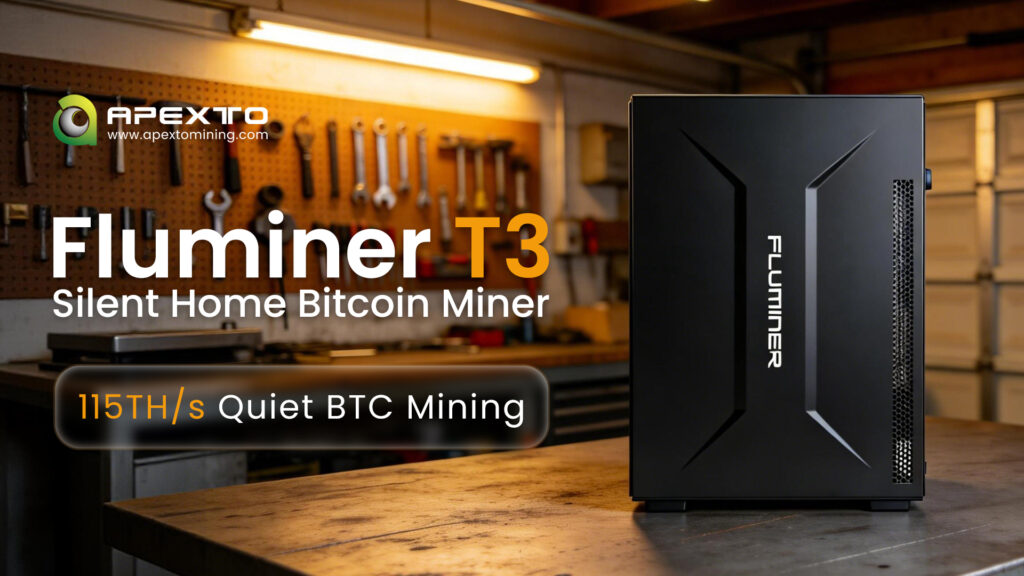
Fluminer T3 Silent Home Bitcoin Miner | 115TH/s Quiet BTC Mining
Search Blog
Recent Posts


Join our community


For media inquiries, please contact
info@apexto.com.cn


