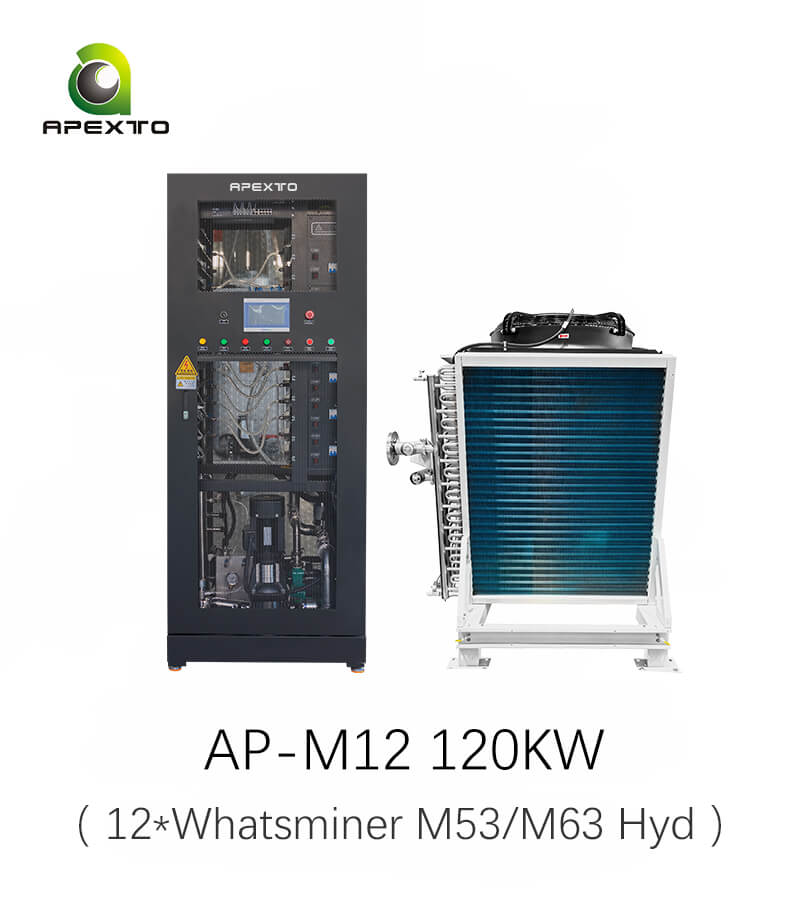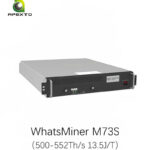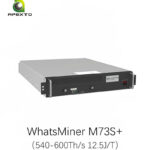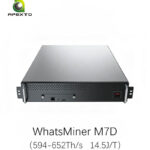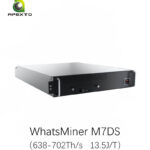
12-Slot 120kW Whatsminer 2U Hydro Cooling Rack
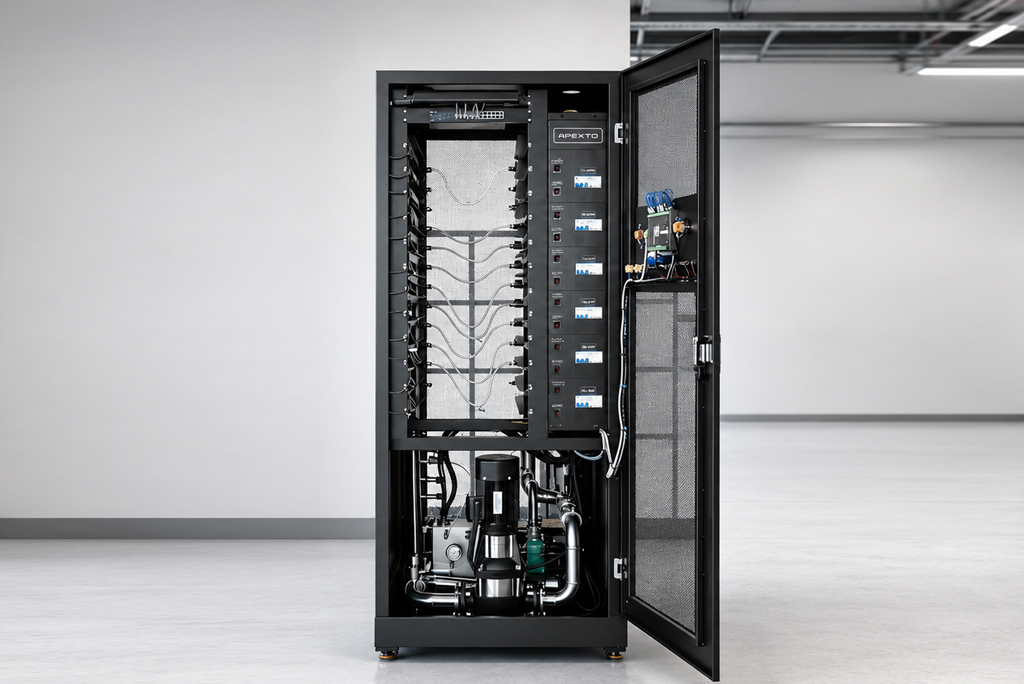
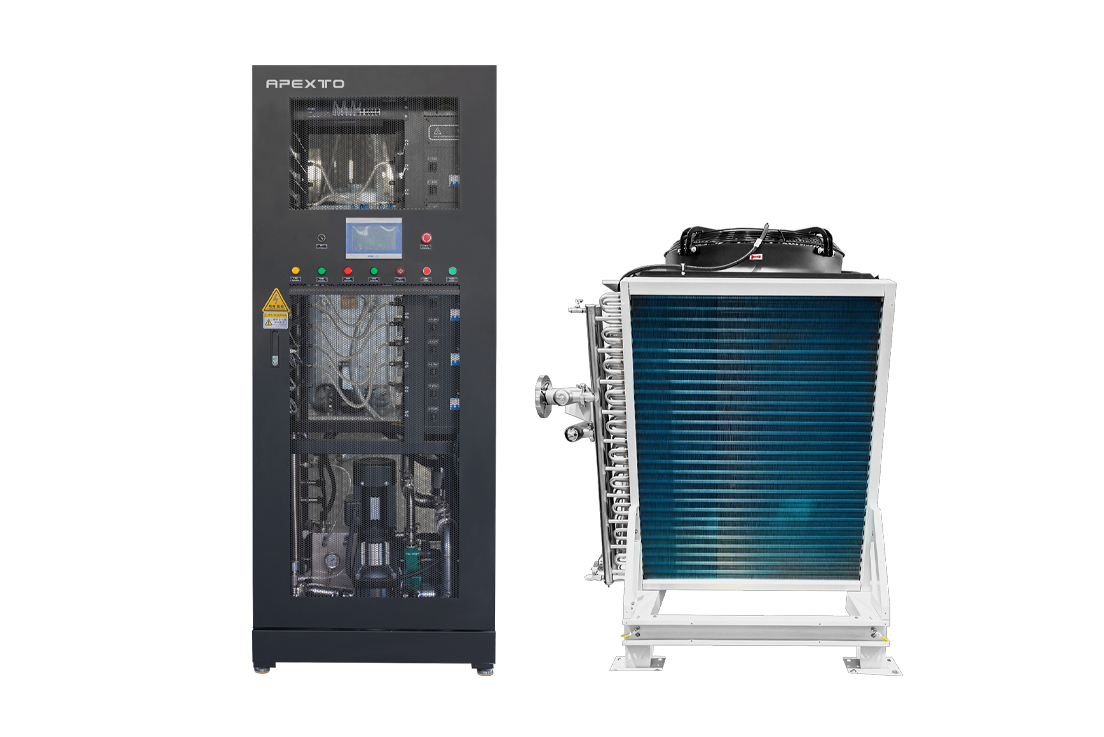
This Whatsminer water cooling cabinet supports 12 Whatsminer M53, M63, or M73 units for efficient water-cooled Bitcoin mining with a 120kW cooling capacity.
$9,350.00 – $10,350.00Price range: $9,350.00 through $10,350.00
Not Fitting Your Site?
Tell us your mining capacity and site requirements, and we'll recommend the right hydro-cooling container for your deployment.
How your container order works
Submit form
Tell us delivery country & site details
Get your quote
Complete pricing within 24 hours
Expert review
Discuss specs, customise setup
DDP delivery
Container shipped to your site
Compact 120kW hydro cooling rack for 12 WhatsMiner 2U units
CONTAINER CAPACITY
12 UNITS
Housed at full load
120 KW
Continuous electrical load
Custom
Standard
Hydro
Thermal management
POWER INPUT
380V–415V AC 50/60Hz
AVAILABILITY
In stock, ready to ship • DDP Sea Shipping Available
View More ›
Show 11 more models
Product Description
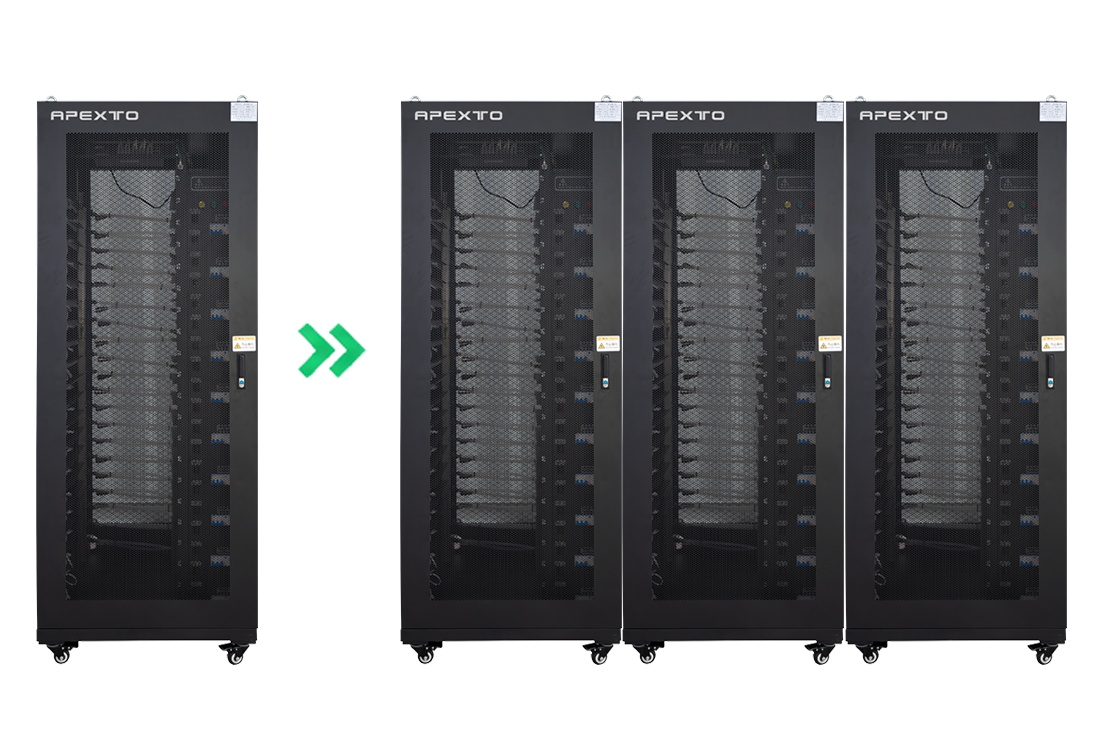
An entry-level hydro cooling solution for compact mining deployments, this 12-slot 120kW rack is designed for WhatsMiner 2U hydro miners in home mining, small facilities, and initial hydro cooling projects.
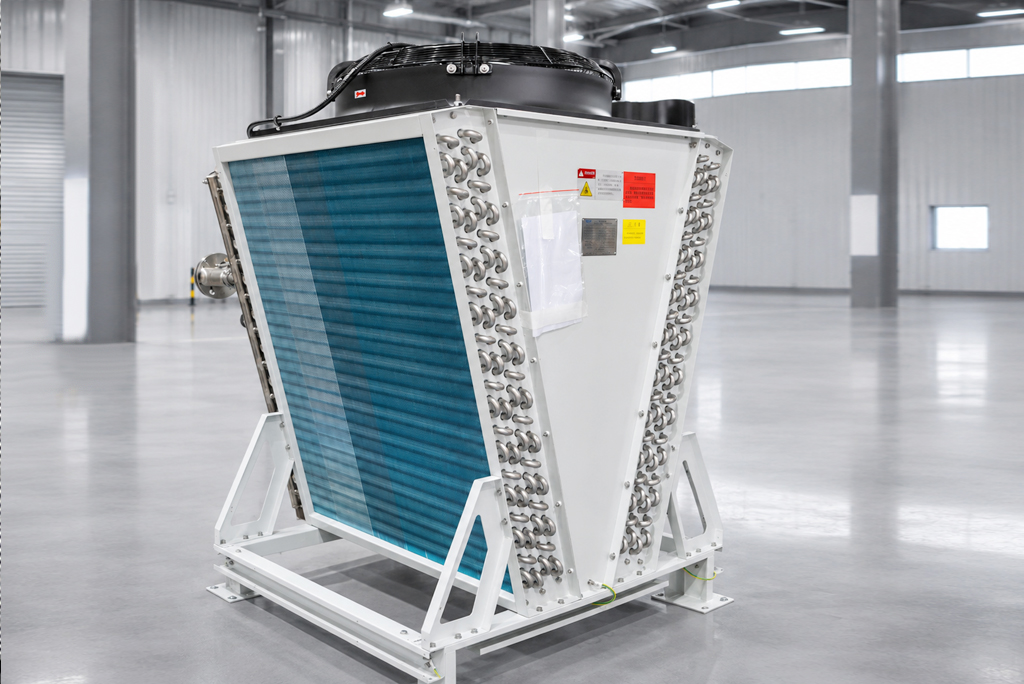
Its compact rack design provides an efficient way to transition from traditional air cooling to liquid cooling without requiring large-scale infrastructure. The system supports flexible heat dissipation configurations with either a dry cooler or closed cooling tower, allowing adaptation to different climates and installation environments.
Combined with an integrated liquid circulation system and all-in-one cabinet design, it provides a plug-and-play cooling solution with simplified installation and quick deployment, allowing users to connect power and start mining with minimal setup.
Core Advantages
01. Silent Home & Office Integration
This integrated cabinet combines all essential components into a single unit for home or office use. It effectively reduces operational noise by replacing loud fans with a quiet liquid loop to save indoor space.
02. Dedicated 2U Rack with Individual Control
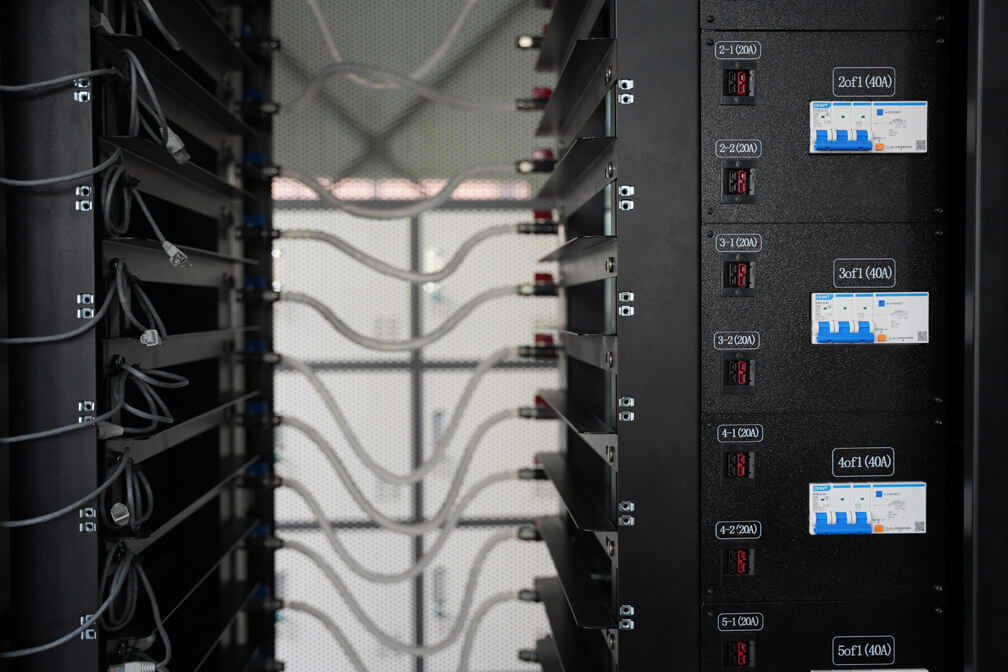
Designed with dedicated 2U rails for Whatsminer units, each slot features an individual power switch. This allows for maintenance on single miners without stopping the rest of the rack to ensure stable uptime.
03. Industrial Leak-Proof Connections
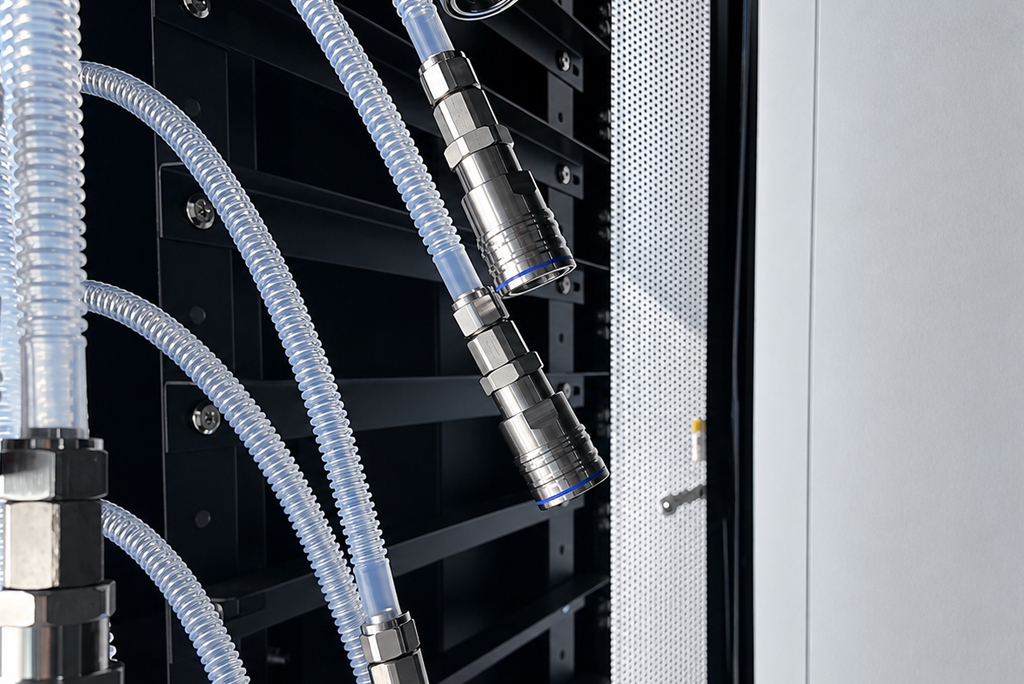
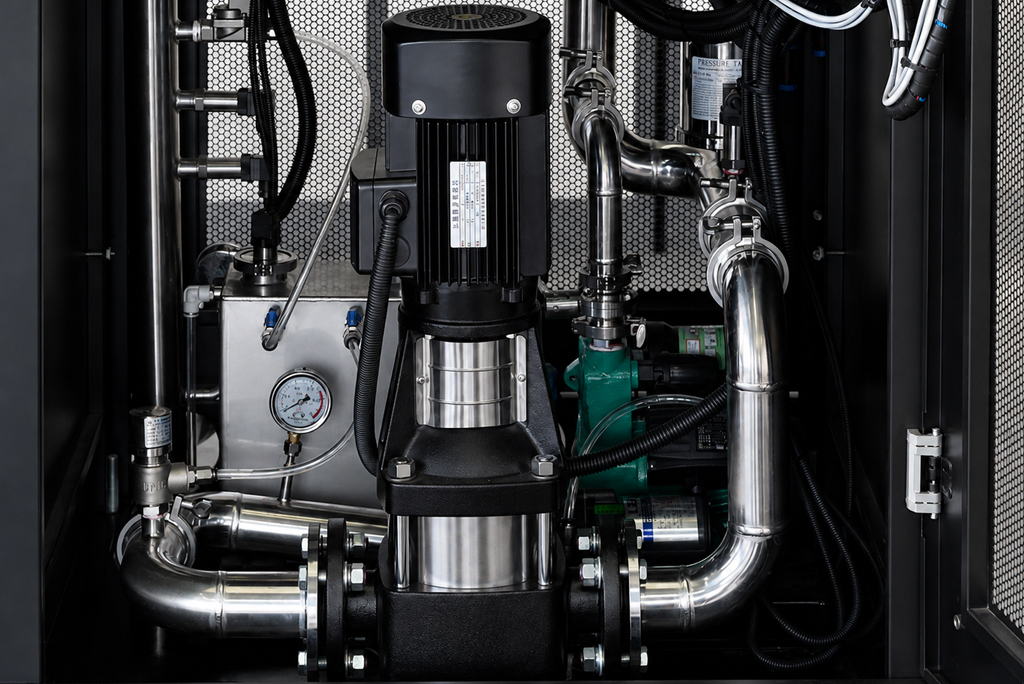
The internal manifold utilizes 304 stainless steel piping and industrial leak-proof connectors. This secure setup ensures a dry environment for your hardware by preventing fluid leaks during long-term operation.
04. Standardized CDU Module Function
The integrated CDU module includes an industrial-grade pump and expansion tank. It maintains stable fluid pressure and ensures the 120kW heat load is exported efficiently to the external radiator consistently.
05. Automated PLC Management Logic
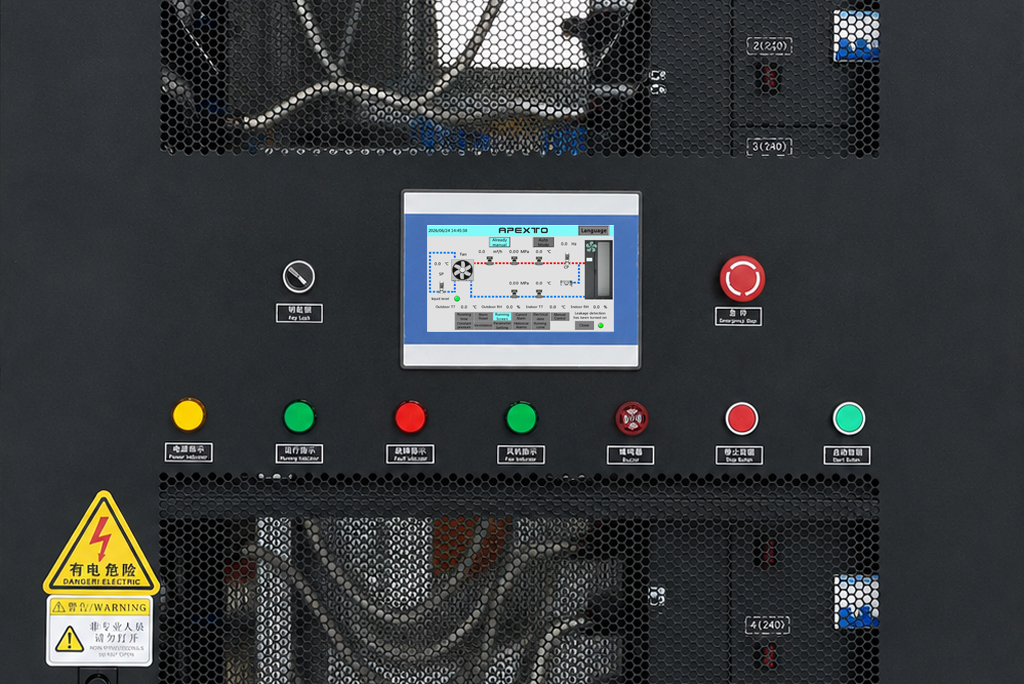
The PLC management system provides real-time monitoring of fluid temperature and pressure. It automatically adjusts pump and fan speeds to maintain thermal balance, ensuring safe and efficient performance daily.
06. Flexible Dry Cooler or Tower Options
Users can choose between a dry cooler or a closed cooling tower as the external heat dissipation device. This allows the system to adapt to local water access and climate conditions for optimal performance.
Full Specifications
External dimensions
L:850mm、W:1000mm、H:2130mm
Internal dimensions
L:800mm、W:950mm、H:2080mm
Weight
350KG
|
Model |
AP-M12 |
Installed capacity |
12 Seat |
|
Heat Dissipation Capacity |
120 kW |
Power of the light-duty vertical multistage pump |
2.2 kW |
|
Power of the fluid replenishing pump |
0.2 kW |
Total power of the dry cooling tower fan |
4.15 kW |
|
Total power of the closed cooling tower fan |
1.1 kW |
Total power of the closed cooling tower spray pump |
0.75 kW |
|
System pipeline pressure |
0.2-0.4 Mpa |
Operating temperature range of the system |
0-50 °C |
|
Coolant circulation demand of a single machine |
≥0.6 m³/h |
Total demand for circulating coolant within the system |
≥0.15 m³ |
|
Molded Case Circuit Breaker |
250 A |
Contactor |
9 A |
|
Intermediate relay |
160 V |
CUL certified frequency converter |
380 V |
|
Dry Cooler |
|||
|
Cooling Capacity |
122.6 kW |
Fan Quantity |
1 Pcs |
|
Working Fluid |
Ethylene Glycol |
Fluid Flow Rate |
8.4 m³/h |
|
Inlet / Outlet Temperature |
47–60 ℃ |
Ambient Temperature |
37 ℃ |
|
Operating / Max Pressure |
0.25 / 0.4 MPa |
Dry Cooling Tower Fan Total Power |
4.75 kW |
|
Dry Cooler Dimensions |
1550 × 1172 × 1710 MM |
Dry Cooler Weight |
378 KG |
12-Slot Whatsminer Hydro Cooling Rack Product Brochure
Complete product specifications, installation guide, and operational instructions.
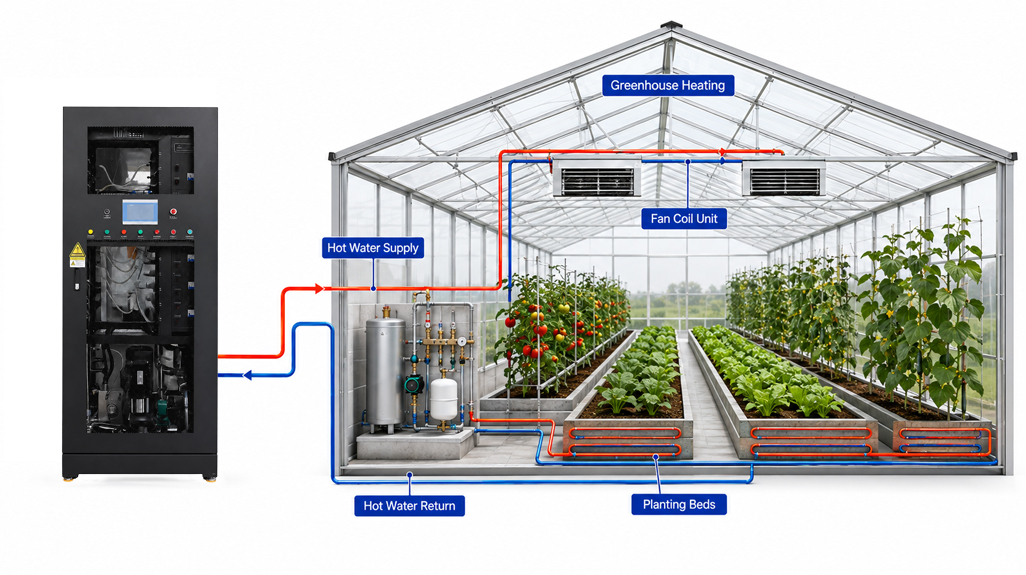
Hydronic Heat Recovery Solution
Hydro cooling systems that double as flexible heating solutions—turning mining heat into efficient warmth anywhere it's needed.
Key Benefits & Applications:
- Versatile Heating Integration: Seamlessly supports underfloor heating, radiators, swimming pools, and other applications—offering efficient warmth across different environments.
- Customizable Options: Heating modules can be tailored to match your building layout, heating system, and specific usage requirements.
- Energy Reuse: Repurpose mining-generated heat to reduce energy waste and lower overall heating costs.
Complete Cooling Solutions
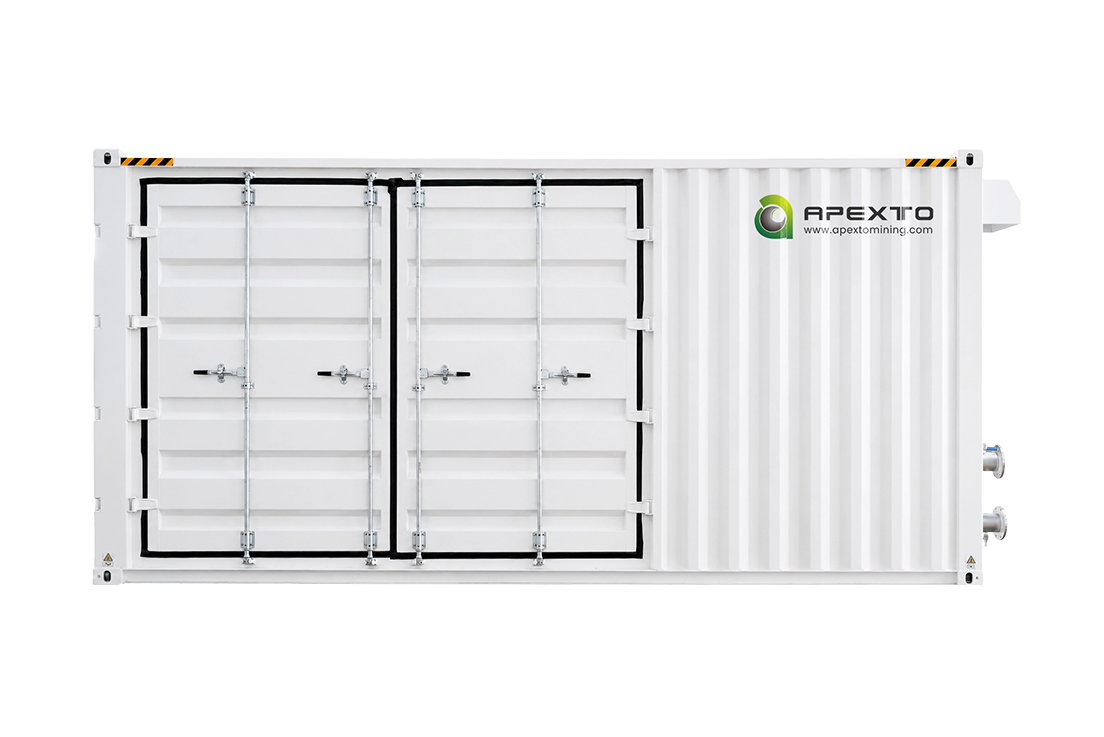
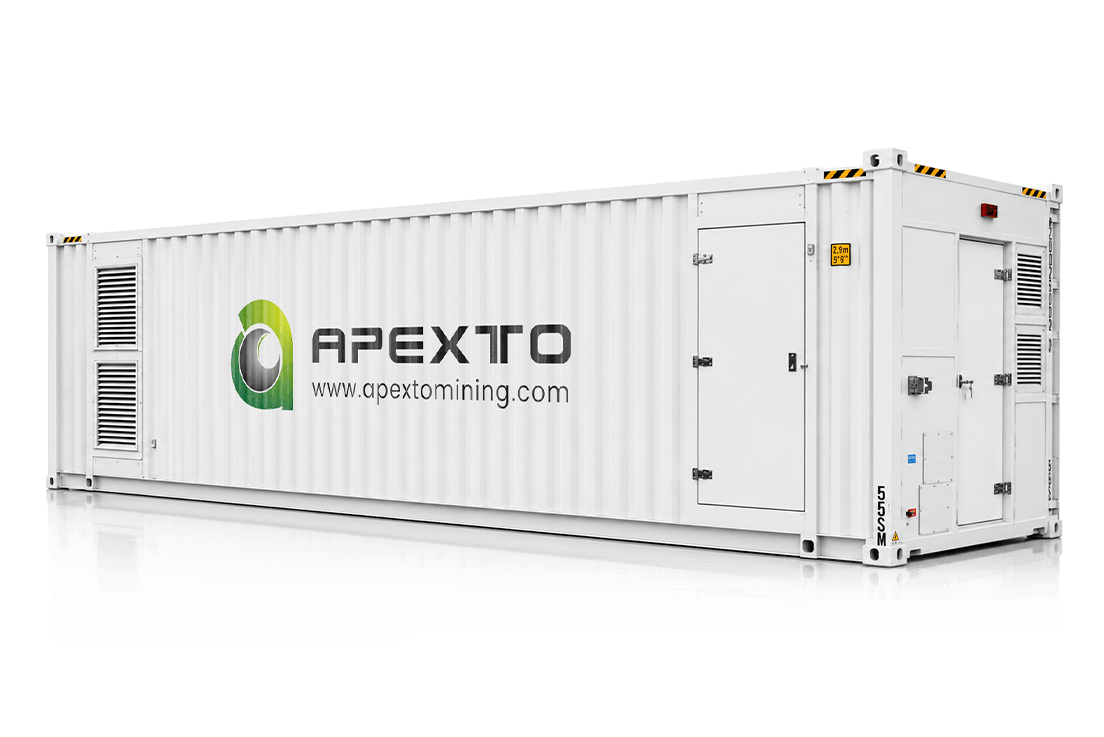
We design and manufacture a complete range of hydro cooling solutions for every scale, from hydro cooling cabinets and containers to CDUs and dry coolers.
|
❄️ Cooling Capacity |
|
⚙️ Miner Slots |
|
📏 Dimensions (L × W × H) |
|
🏢 Application |
Compare
12-Slot Integrated Whatsminer Hydro Cooling Rack
|
120 kW |
|
12 Slots |
|
8,50 × 1,000 × 2,130 mm |
|
Home & Office Setup |
20-Slot Modular Whatsminer Hydro Cooling Rack
|
200 kW |
|
20 Slots |
|
8,50 × 1,000 × 2,130 mm |
|
Modular Capacity Expansion |
160-Slot Whatsminer Hydro Cooling Container
|
1600 kW |
|
160 Slots |
|
6,058 × 2,438 × 2,896 mm |
|
Industrial Infrastructure |
240-Slot Whatsminer Hydro Cooling Container
|
2400 kW |
|
240 Slots |
|
1,3716 × 2,438 × 2,896 mm |
|
Enterprise-Scale Farms |
12-Slot Whatsminer Home Hydro Cooling Rack FAQs
Yes. The system is designed for up to 120kW of total miner load and supports compatible WhatsMiner M53, M63, and M73 Hydro miners, including high-performance and overclocked operation.
For a fully loaded rack, the combined miner power should remain within the 120kW system capacity.
Yes. The system does not need to be fully populated from day one.
You can start with a smaller number of miners and add additional units as your available power and mining capacity increase, making it suitable for phased deployment without replacing the entire cooling rack.
The main site requirements are industrial three-phase power, suitable installation space, piping and electrical access for the dry cooler, and sufficient ventilation around the heat-rejection equipment.
The mining rack and quick-connect cooling interfaces are prepared before shipment, helping reduce on-site assembly work.
The required quick connectors are prepared with the cooling rack before shipment.
The miners can be connected directly to the corresponding coolant supply and return lines during installation, reducing additional pipe fitting and compatibility work on site.
A single miner can be isolated from the cooling loop without shutting down the entire rack.
This allows maintenance, replacement, or troubleshooting of one unit while the remaining miners continue operating, reducing unnecessary downtime for the whole mining cluster.
Yes. The system can be paired with a 122.6kW dry cooler designed to reject the heat generated by the mining rack.
For stable summer operation, the dry cooler should be installed with sufficient intake and exhaust space so that hot discharge air cannot recirculate back into the unit.
Yes. The cooling rack supports MODBUS-RTU communication and can be integrated into a centralized monitoring or site-management system.
This allows operators to monitor key cooling parameters and makes the system more suitable for professional mining sites operating multiple racks.
No. Additional cooling racks can be added as the mining site expands.
For future multi-rack deployments, it is better to reserve sufficient electrical capacity, piping space, dry-cooler installation area, and monitoring interfaces from the beginning. This reduces the amount of infrastructure that needs to be rebuilt during later expansion.