


Introduction: More Than Just Computing Power
Bitcoin mining is often misunderstood as merely “solving complex math problems,” but this oversimplification misses the profound economic, cryptographic, and social engineering achievements embedded in Satoshi Nakamoto’s 2008 whitepaper. At its core, Bitcoin mining is the process that simultaneously secures the Bitcoin network, validates transactions, and introduces new bitcoins into circulation—creating a self-sustaining, decentralized financial system without central authorities, banks, or intermediaries.
Unlike traditional mining for physical commodities, Bitcoin mining is a highly competitive digital process where participants (miners) use specialized hardware to perform cryptographic computations. This process serves three critical functions: (1) it verifies and confirms transactions, preventing double-spending; (2) it adds these verified transactions to Bitcoin’s public ledger (the blockchain); and (3) it rewards miners with newly minted bitcoins and transaction fees, creating economic incentives for honest participation.
In this comprehensive exploration, we’ll demystify Bitcoin mining by examining its technical foundations, economic incentives, environmental considerations, technological evolution, and its role in maintaining Bitcoin’s revolutionary promise of trustless, permissionless finance.
The Cryptographic Foundation: Proof-of-Work
The heart of Bitcoin mining is the proof-of-work (PoW) consensus mechanism—a brilliant solution to the Byzantine Generals Problem, which asks how distributed parties can reach agreement when some may be unreliable or malicious. PoW requires miners to expend real-world computational resources (electricity and hardware) to find a solution to a cryptographic puzzle, making attacks economically unfeasible.
The puzzle centers on finding a specific hash value—a unique digital fingerprint—for a block of transactions. Miners take the block’s data (including a reference to the previous block, transaction details, and a timestamp) and add a random number called a “nonce.” They then run this combined data through the SHA-256 cryptographic hash function. The goal is to find a nonce that produces a hash with a certain number of leading zeros—a target determined by Bitcoin’s difficulty adjustment algorithm.
What makes this computationally intensive is that SHA-256 is a one-way function: it’s easy to compute a hash from input data, but impossible to reverse-engineer the input from the hash. Therefore, miners must try billions of nonces per second through trial and error until they find one that satisfies the current difficulty target. This process is deliberately resource-intensive to ensure security—the more computational power dedicated to securing the network, the more expensive it becomes for any single entity to attempt a 51% attack.
The difficulty target adjusts approximately every two weeks (2016 blocks) to maintain Bitcoin’s consistent block time of roughly 10 minutes. If more miners join the network and hash rate increases, the difficulty rises to keep block times stable. Conversely, if miners leave, the difficulty decreases. This self-regulating mechanism ensures Bitcoin’s predictable issuance schedule and maintains network security regardless of fluctuating participation.
From Transactions to Blocks: The Mining Process Step-by-Step
Bitcoin mining isn’t just about computing power—it’s a sophisticated coordination of economic incentives, cryptography, and network protocols. Let’s break down the process:
Step 1: Transaction Collection and Validation Miners first gather pending transactions from the mempool (memory pool), Bitcoin’s waiting area for unconfirmed transactions. Before including them in a candidate block, miners validate each transaction against Bitcoin’s consensus rules: checking digital signatures, ensuring no double-spending, verifying inputs haven’t been spent previously, and confirming transaction fees meet minimum requirements.
Step 2: Block Construction Valid transactions are organized into a candidate block. Each block contains several critical components: a header (with metadata like timestamp, previous block hash, Merkle root), the transaction list, and the coinbase transaction (the miner’s reward). The Merkle root is a cryptographic summary of all transactions in the block, enabling efficient verification of whether a specific transaction is included.
Step 3: The Mining Race With the candidate block constructed, miners begin the computationally intensive work of finding a valid nonce. They repeatedly increment the nonce, hash the block header, and check if the resulting hash meets the current difficulty target. This is a lottery-like process—each hash attempt has an equal, minuscule probability of success. The first miner to find a valid solution broadcasts it to the network.
Step 4: Network Verification and Consensus Other nodes on the Bitcoin network independently verify the solution. They check that the hash meets the difficulty requirement, that all transactions in the block are valid according to consensus rules, and that the block follows proper formatting. Once verified, nodes accept the block and add it to their copy of the blockchain, extending the chain.
Step 5: Reward Distribution The successful miner receives two types of rewards: the block subsidy (newly created bitcoins) and all transaction fees from the block’s transactions. As of 2026, following Bitcoin’s halving cycle, the block subsidy stands at 3.125 BTC per block (having been halved from 6.25 BTC in April 2024). This subsidy halves approximately every four years, creating Bitcoin’s deflationary monetary policy with a maximum supply cap of 21 million coins.
The Evolution of Mining Hardware: From CPUs to ASICs
Bitcoin mining hardware has undergone dramatic evolution, reflecting the increasing competitiveness and specialization of the industry:
CPU Mining (2009-2010) In Bitcoin’s infancy, mining was possible on standard computer processors. Satoshi Nakamoto himself mined the genesis block using a CPU. This era embodied Bitcoin’s original vision of egalitarian participation—anyone with a laptop could contribute to network security.
GPU Mining (2010-2013) Graphics Processing Units offered significantly higher parallel processing capabilities than CPUs, making them far more efficient for the repetitive hashing operations. This shift marked the beginning of specialized hardware and increased competition.
FPGA Mining (2012-2013) Field-Programmable Gate Arrays represented the next leap—reconfigurable chips that could be optimized specifically for SHA-256 hashing. While more efficient than GPUs, FPGAs required significant technical expertise to program.
ASIC Mining (2013-Present) Application-Specific Integrated Circuits revolutionized Bitcoin mining. Designed exclusively for SHA-256 hashing, ASICs deliver orders of magnitude better performance per watt than general-purpose hardware. Modern ASICs like Bitmain’s Antminer S21 or MicroBT’s Whatsminer M60 can achieve over 200 terahashes per second (TH/s) while consuming kilowatts of power. This specialization has created significant barriers to entry, concentrating mining power among those who can afford large-scale operations with access to cheap electricity.
This hardware evolution highlights Bitcoin’s tension between decentralization ideals and practical security requirements. While ASICs make Bitcoin more secure against attacks, they’ve also contributed to mining centralization concerns, particularly around manufacturing dominance by Chinese companies and geographic concentration in regions with favorable energy policies.
Mining Pools: Collaboration in Competition
As mining difficulty increased and individual success probabilities decreased, solo mining became statistically improbable for all but the largest operations. This led to the rise of mining pools—collaborative groups where miners combine their computational resources to increase their chances of finding blocks and earning rewards.
In a mining pool, participants contribute their hash power to solve blocks collectively. When the pool successfully mines a block, rewards are distributed among participants proportional to their contributed work (measured in “shares”—valid partial solutions that meet easier difficulty targets). Popular pool reward systems include Pay-Per-Share (PPS), Proportional, and Pay-Per-Last-N-Shares (PPLNS), each with different risk/reward tradeoffs.
While pools have democratized participation by allowing smaller miners to earn consistent, albeit smaller, rewards, they’ve introduced new centralization risks. In 2014, the GHash.IO pool briefly approached 51% of the network’s hash rate, raising legitimate concerns about potential manipulation. Today, regulatory scrutiny and community pressure encourage diversification across multiple pools to maintain network resilience.
Economic Incentives and Sustainability
Bitcoin mining is fundamentally an economic activity driven by profit motives. Miners calculate profitability based on several key factors: hash rate (computational power), electricity costs (typically 60-70% of operational expenses), hardware efficiency (hashes per joule), cooling requirements, and Bitcoin’s market price relative to mining rewards.
The halving cycle creates predictable scarcity, driving long-term price appreciation expectations. However, each halving reduces miner revenue by 50%, forcing inefficient operations to exit the market and consolidating hash power among more efficient players. This “market cleansing” mechanism ensures the network remains secured by the most cost-effective participants.
Environmental concerns have dominated public discourse about Bitcoin mining. Critics point to its substantial energy consumption—estimated at over 100 terawatt-hours annually, comparable to some medium-sized countries. However, recent studies reveal a more nuanced picture: over 50% of Bitcoin mining now utilizes renewable energy sources, with many operations strategically located near hydroelectric dams, geothermal plants, or flared natural gas capture facilities. Some forward-thinking miners even provide grid stability services, acting as flexible demand response assets that help balance intermittent renewable generation.
Security Implications and the 51% Attack
Bitcoin’s security model relies on the assumption that no single entity controls more than 50% of the network’s hash rate. A 51% attack would theoretically allow an attacker to reverse transactions, prevent new transactions from gaining confirmations, and engage in double-spending. However, executing such an attack would require astronomical capital investment in hardware and electricity, with diminishing returns.
Crucially, a 51% attack cannot: steal bitcoins from other wallets, change Bitcoin’s protocol rules, create bitcoins out of thin air beyond the scheduled issuance, or reverse other miners’ transactions. The economic disincentives are profound—the attacker would need to invest billions to temporarily disrupt the network, only to destroy the very asset (Bitcoin) whose value enables their attack’s profitability.
Bitcoin’s security has proven remarkably robust over 15+ years, surviving numerous attempts at disruption, protocol challenges, and market volatility. Its security budget—the total value of block rewards plus transaction fees—currently exceeds $1 billion annually, making it arguably the most secure distributed system ever created.
The Future of Bitcoin Mining
Looking ahead, Bitcoin mining faces several evolutionary pressures. The transition from block subsidy dominance to transaction fee reliance will accelerate as the subsidy approaches zero around 2140. This necessitates continued growth in Bitcoin’s utility and transaction volume to sustain miner incentives.
Technological innovations include more energy-efficient ASIC designs, liquid immersion cooling for data centers, and integration with renewable energy microgrids. Regulatory frameworks are maturing globally, with some jurisdictions recognizing mining as legitimate economic activity while others impose restrictions.
Perhaps most significantly, Bitcoin mining is evolving beyond mere computation toward becoming infrastructure for broader blockchain ecosystems. Some mining operations now offer cloud computing services during off-peak hours, participate in Layer 2 validation, or develop specialized hardware for emerging consensus mechanisms.
Conclusion: The Engine of Trustless Finance
Bitcoin mining represents one of humanity’s most remarkable technological achievements—a self-organizing, globally distributed system that creates trust without trusted intermediaries. It transforms electricity and silicon into mathematical certainty, converting computational work into economic value and network security.
While often criticized for its energy consumption, Bitcoin mining has catalyzed innovation in renewable energy utilization, grid management, and hardware efficiency. Its economic model has created a multi-billion dollar industry that secures the world’s most valuable digital asset while providing financial inclusion to millions worldwide.
More than just a technical process, Bitcoin mining embodies a philosophical statement about human cooperation: that complex, valuable systems can emerge from the self-interested actions of distributed participants, governed not by authority but by transparent, verifiable mathematics. As we navigate an increasingly digital future, Bitcoin mining stands as both a practical infrastructure and a profound demonstration of what’s possible when cryptography, economics, and open-source collaboration converge.
The digital gold rush continues—not for physical treasure, but for the foundational infrastructure of a new financial paradigm.

About Ada
I am a Data Analyst at Apexto Mining, with experience in the cryptocurrency mining industry since 2017. My work focuses on analyzing ASIC performance, thermal efficiency, and mining profitability, especially in hydro and immersion cooling environments. I contribute to technical research and content creation, including blog articles and educational materials on mining hardware and infrastructure optimization. I also work closely with engineering and sales teams to translate technical data into practical insights for customers and partners. I believe mining technology should be communicated clearly and transparently, supported by real data and measurable performance. Outside of work, I enjoy yoga, reading, and traveling.
View all posts by AdaRelated posts
What Is Mining Difficulty?

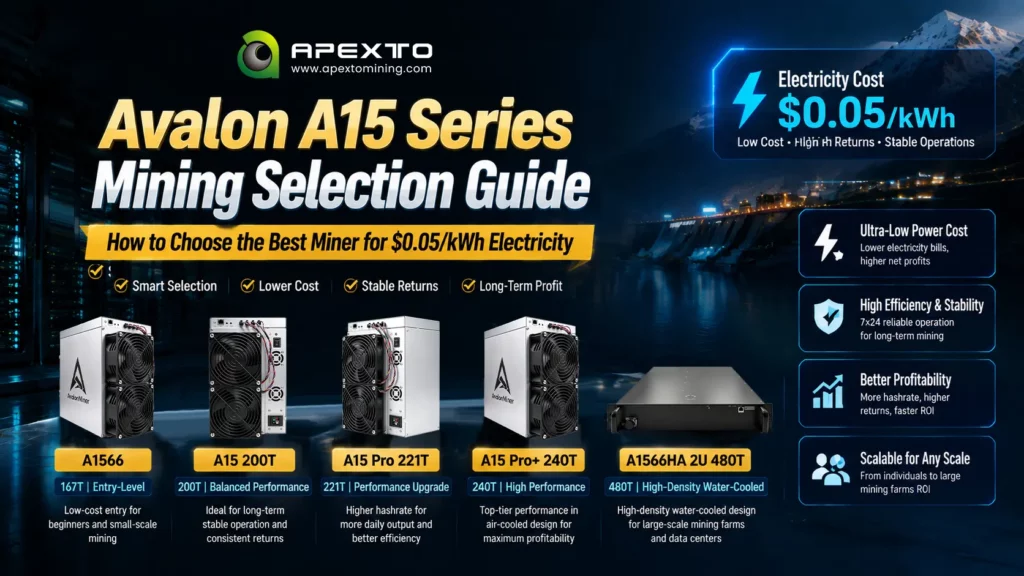
Avalon A15 Miner Buying Guide 2026
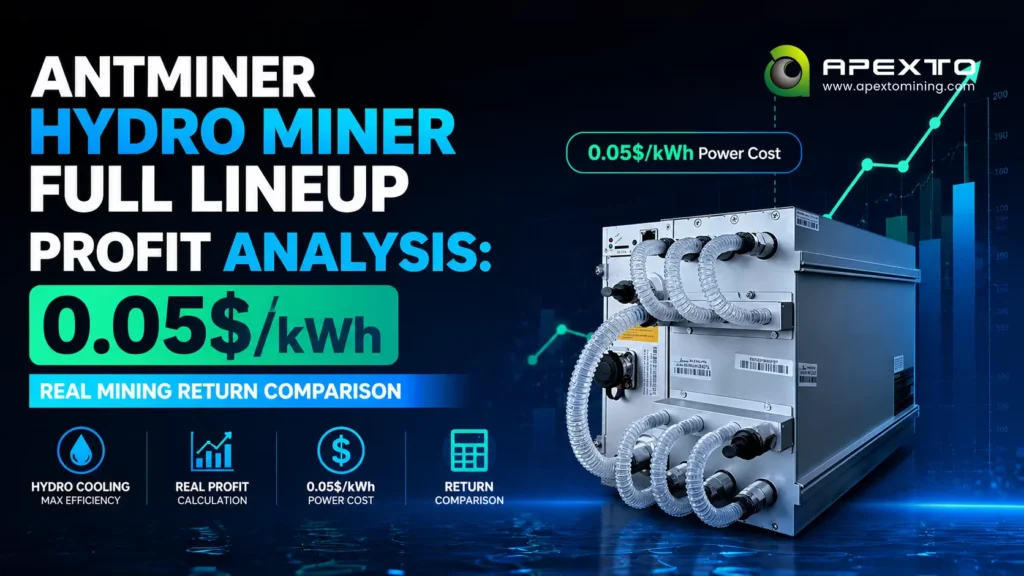
Antminer Hydro Miner Full Lineup Profit Analysis: 0.05$/kWh Real Mining Return Comparison
Bitaxe Miner Comparison Guide 2026: Gamma vs Supra vs Ultra Specifications & Buying Guide
ASIC Miner Efficiency 2026: Top Models for US Electricity Rates
Top NerdMiner Solo Miners: Specification and Profitability
Search Blog
Recent Posts


Join our community


For media inquiries, please contact
info@apexto.com.cn


