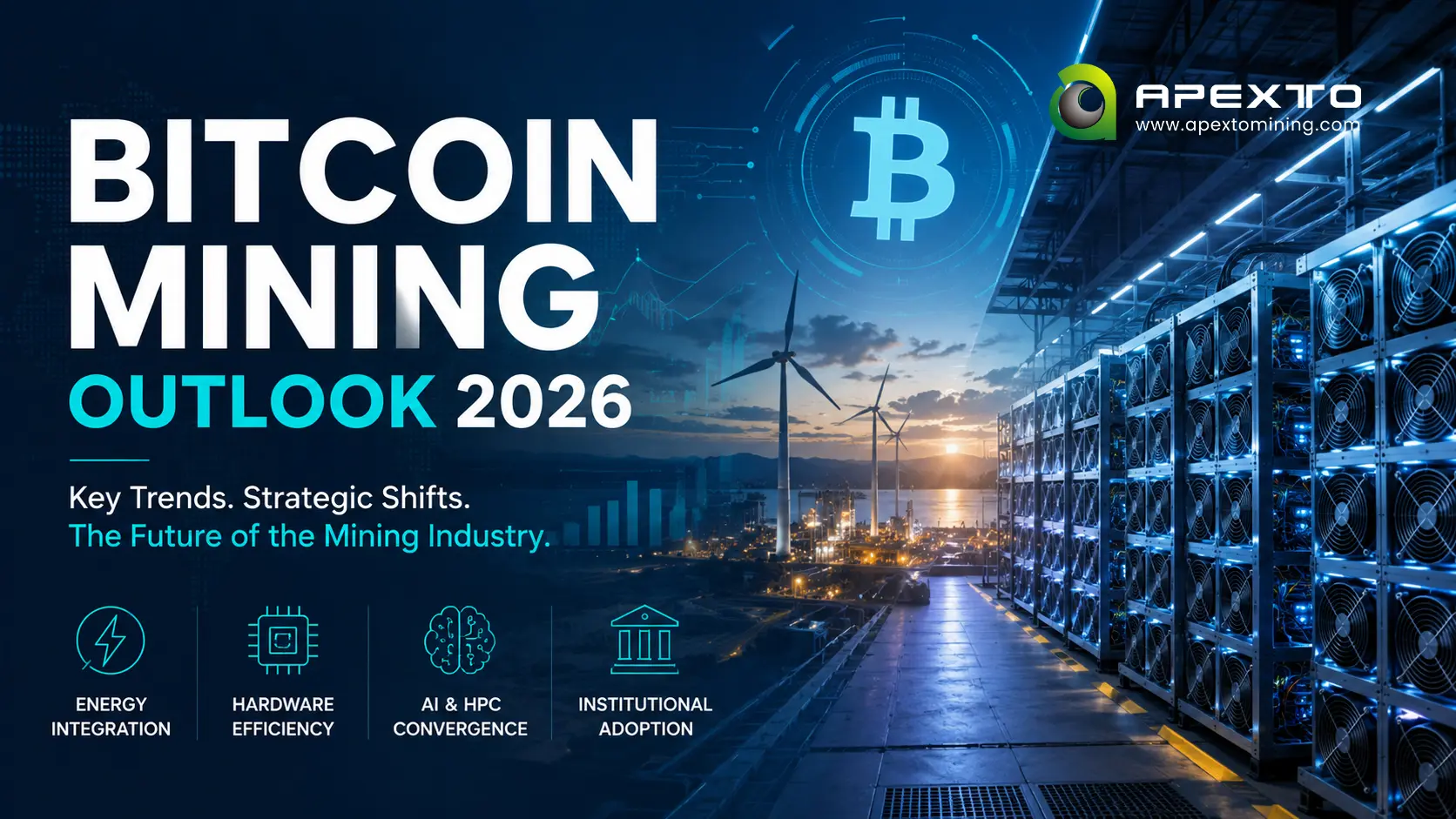
The Bitcoin mining industry isn’t just growing — it’s undergoing structural redefinition. In 2026, the race isn’t for hashrate alone. It’s for 策略槓桿: control over energy, hardware, AI infrastructure, sovereign policy, and financial instruments. Based on Q1 2026 operational data, regulatory filings, and capital flows, we identify seven non-negotiable shifts separating leaders from laggards.
1. Macro Tailwinds Are Real — But Not Universal
The Fed’s projected 2–3 rate cuts in 2026 (74% probability, per Grayscale) are accelerating institutional inflows — but only where regulation enables custody. The U.S. CLARITY Act, now passed and signed into law (effective March 1, 2026), didn’t just “clarify” Bitcoin’s status. It unlocked $2.8B in new institutional mining financing in Q1 alone (Bloomberg Intelligence). Banks now hold >$410M in Bitcoin-backed loans — up 320% YoY.
Key implication: Regulatory clarity is now a geographic arbitrage opportunity. Miners operating under compliant frameworks (U.S., Switzerland, Singapore, UAE) access capital at 4.2–5.8% APR. Those in unregulated jurisdictions pay 11–14% — a 600–900 bps cost disadvantage that compounds over 5-year infrastructure lifecycles.
2. Vertical Integration Is Now Table Stakes — Not Aspiration
In 2023, vertical integration meant signing a 10-year PPA. In 2026, it means owning the substation.
Top-tier miners now control ≥65% of their power supply chain: 42% own generation assets (wind/solar/battery), 28% operate gas peaker plants, and 30% co-develop grid infrastructure with utilities. Crucially, integrated players report 37% lower LCOE (Levelized Cost of Energy) vs. grid-dependent peers (Apex Grid Analytics, Q1 2026).
Hardware integration follows: 6 of the top 10 public miners now design ASIC firmware in-house. This isn’t about building chips — it’s about real-time firmware updates that dynamically throttle hashboards during grid stress events, preserving uptime while earning ancillary revenue.
3. AI Retrofit Isn’t Diversification — It’s Survival Infrastructure
The “AI pivot” narrative is misleading. This isn’t miners dabbling in GPUs. It’s infrastructure repurposing at scale.
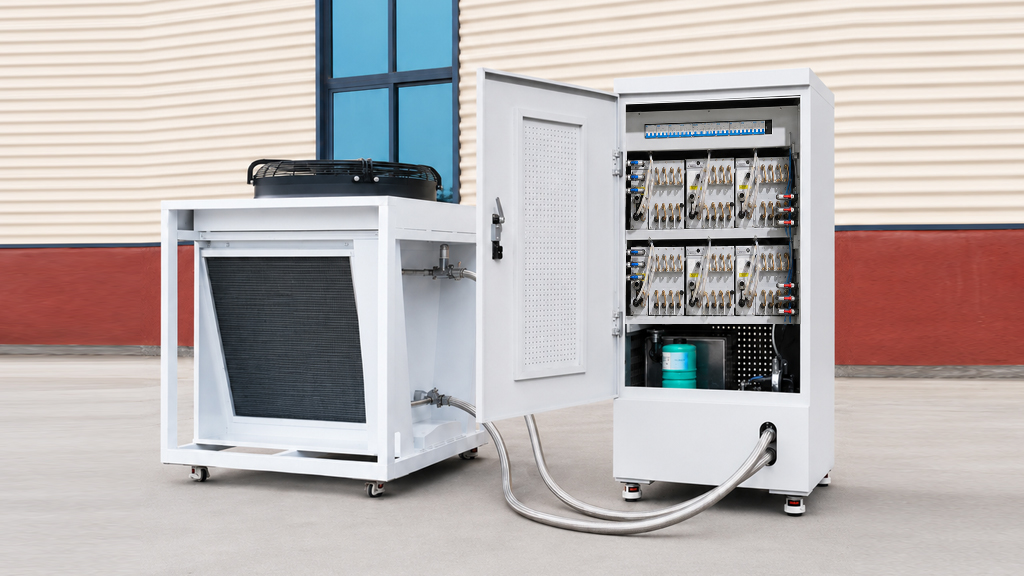
Consider this: A 100MW Bitcoin facility consumes ~120MW of cooling capacity. An equivalent AI cluster consumes ~380MW. The gap isn’t solved by swapping ASICs for H100s — it’s solved by re-engineering the thermal stack. Leading miners (e.g., Core Scientific, Marathon) now deploy immersion-cooled GPU racks 以及 air-cooled ASICs in the same facility — sharing transformers, switchgear, and grid interconnects.
Result? Capex efficiency: $1.2M/MW for AI-ready retrofits vs. $4.7M/MW for greenfield AI data centers (McKinsey Energy Infrastructure Report, April 2026). And crucially: AI workloads provide 24/7 baseload demand — stabilizing grid contracts previously vulnerable to Bitcoin price volatility.
4. Efficiency Is Binary: <8 J/TH or Exit
The 10 J/TH threshold is dead. In Q1 2026, the network-weighted average efficiency hit 7.4焦耳/時, driven by next-gen 3nm ASICs from Bitmain and MicroBT.
這在實際操作中意味著什麼?
- Equipment older than 24 months (≥15 J/TH) operates at negative ROI unless electricity costs ≤ $0.022/kWh — a threshold met by <12% of U.S. industrial tariffs.
- New deployments require real-time efficiency benchmarking: Top operators now track kWh/TH per rack, per hour, feeding data into automated shutdown protocols for underperforming units.
This isn’t incremental improvement. It’s a hard reset. 2026 sees the first wave of ASIC retirement-as-a-service — where legacy rigs are decommissioned, refurbished for edge-AI inference, or recycled for rare-earth metals.
5. Sovereign Mining Is Strategic — Not Speculative
Turkmenistan’s Virtual Assets Law (Jan 2026) wasn’t about licensing miners. It was about monetizing stranded assets. Their national grid curtails 2.1 TWh/year of hydropower — enough to mine 14,000 BTC annually at current difficulty.
But the bigger trend is reserve strategy. Bhutan now holds 12,800 BTC (valued at $1.64B) — accumulated solely via domestic mining since 2019. El Salvador’s “Volcano Bonds” refinancing in May 2026 allocated $500M specifically to geothermal-powered mining expansion. This isn’t crypto idealism. It’s sovereign balance sheet optimization: Bitcoin provides higher yield, zero counterparty risk, and instant liquidity vs. traditional FX reserves.
6. Cloud Hashrate Is Maturing — But Fragmentation Remains
Retail participation is surging — up 63% YoY (CoinGecko Data, Q1 2026) — but the model is evolving. Gone are the opaque “lifetime contracts.” Leading platforms (e.g., NiceHash Pro, HashVault) now offer:
- SLA-backed hashrate: 99.2% uptime guarantee, with automatic BTC compensation for downtime.
- 動態定價: Real-time hashrate pricing tied to Bitcoin price, network difficulty, and pool fee variance.
- RWA 代幣化: Hashrate contracts backed by audited physical infrastructure (on-chain verification via Chainlink Oracles).
Still, fragmentation persists: 41% of cloud hashrate volume flows through unregulated offshore entities. Institutional buyers now demand ISO 27001 certification and third-party infrastructure audits — a bar only 7 providers currently meet.
7. Financialization = De-Risking, Not Derivatives Gambling
Mining is shedding its “high-beta commodity play” label. How?
- Hashrate Forward Contracts: 22% of public miner revenue now comes from 6–24 month fixed-BTC/USD hashrate sales (e.g., Riot Platforms’ $210M contract with Fidelity).
- Miner Leasing: ASICs are now leased like enterprise servers — with maintenance, firmware updates, and efficiency guarantees baked in.
- Infrastructure-Backed Tokens (IBTs): Tokenized shares of mining facilities (e.g., CleanSpark’s Texas site) trade on regulated exchanges with NAV reporting and quarterly audits.
This isn’t speculation. It’s 資本紀律. Top miners now target 1.8x debt-to-EBITDA — down from 3.4x in 2023 — using financial tools to lock in margins, not amplify volatility.
The Bottom Line: Infrastructure, Not Instruments
Bitcoin mining in 2026 is converging with three global megatrends: energy transition, AI compute scarcity, and sovereign digital asset strategy. Winners won’t be those with the most hashrate — but those who treat mining infrastructure as strategic national infrastructure.
關於艾達
我是 Apexto Mining 的資料分析師,自 2017 年以來一直從事加密貨幣挖礦行業。我的工作重點是分析 ASIC 礦機的性能、散熱效率和挖礦收益,尤其是在水冷和浸沒式冷卻環境下。我參與技術研究和內容創作,包括撰寫部落格文章和有關挖礦硬體及基礎設施優化的教育材料。我還與工程和銷售團隊緊密合作,將技術數據轉化為對客戶和合作夥伴切實可行的見解。我相信挖礦技術應該以清晰透明的方式進行溝通,並以真實數據和可衡量的性能為支撐。工作之餘,我喜歡瑜珈、閱讀和旅行。
查看艾達的所有帖子相關文章
Bitcoin Mining Outlook 2026: Seven Strategic Shifts Reshaping the Industry
2026 年 Antminer L9 Hyd 2U 評測:水冷式 Scrypt 挖礦真的值得嗎?
搜尋部落格
最新動態
媒體諮詢,請聯繫
info@apexto.com.cn