🚀 Evolution of Antminer Chip Technology (S9 → S19 → S21 → S23 Hydro)
1. Antminer S9 – The 16nm ASIC Pioneer (2016–2018)
Chip: BM1387 (TSMC 16nm FinFET)
Hashrate: 13.5 TH/s
Efficiency: 98–100 J/T
The Antminer S9 was the turning point that industrialized Bitcoin mining. It introduced the 16nm process, marking a 40% power reduction over 28nm predecessors.
With over 1 billion transistors per chip, it achieved a power efficiency milestone for its time.
Impact:
-
Became the most popular Bitcoin miner globally from 2016–2018.
-
Drove Bitcoin’s total network hashrate from 1 EH/s to 50 EH/s.
-
Affordable and durable — many units remained active even after 2020 in low-cost electricity regions.
Limitation:
As network difficulty and electricity prices increased, the S9’s high power draw gradually made it obsolete by 2020.
2. Antminer S19 Series – The 7nm Efficiency Revolution (2020–2023)
Chip: BM1398 (TSMC 7nm)
Hashrate: Up to 110 TH/s (S19 Pro)
Efficiency: 29.5 J/T
The Antminer S19 series marked a massive generational leap.
Using 7nm chips doubled transistor density and improved performance-per-watt by 3.5× compared to the S9.
Dynamic frequency scaling and intelligent temperature control enabled stable 24/7 operation under harsh environments.
Main Models:
Market Role:
From 2020 to 2023, S19 became the backbone of professional mining farms, especially in regions like North America, Kazakhstan, and hydro-powered areas of Sichuan.
Significance:
It was the first Antminer to optimize ROI per watt — the beginning of the “energy-efficiency competition era.”
3. Antminer S21 – Bridging the Gap to the 5nm Era (2024–2025)
Chip: BM1368 (TSMC 5nm-class / optimized 7nm+)
Hashrate: 200 TH/s
Efficiency: 17.5 J/T
The Antminer S21 acted as the transitional model between air-cooled and hydro-cooled architectures.
It adopted a refined 5nm-class process (often referred to as “4N”), significantly improving performance density while keeping production costs viable.
Key Innovations:
-
Hybrid cooling design: optional hydro-cooling and advanced air-cooling.
-
Smart Power Management: dynamic voltage regulation improved power efficiency by 15%.
-
Enhanced PCB design: optimized heat dissipation and reduced signal delay.
Market Position:
The S21 solidified Bitmain’s dominance during the 2024 bull cycle, offering miners a 30% shorter ROI period than the S19.
It also became the most power-efficient air-cooled miner before the arrival of full-liquid models.
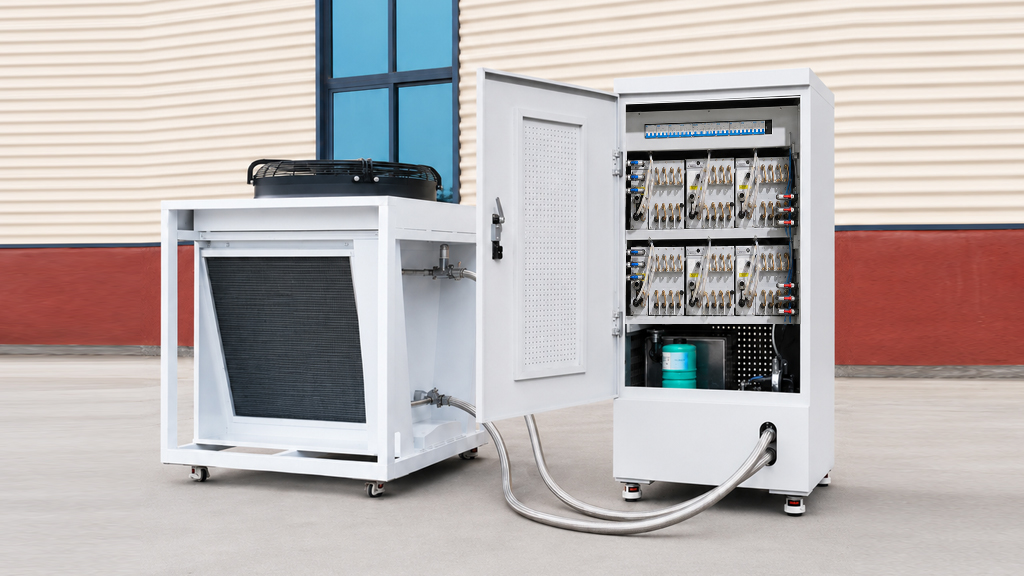
4. Antminer S23 Hydro – The 5nm + Liquid Cooling Revolution (2026–Future)
Chip: BM1399 (5nm, 3D-stacked ASIC)
Hashrate: 580 TH/s
Efficiency: 9.5 J/T
The S23 Hydro redefines the high-performance mining standard.
It’s Bitmain’s first fully liquid-cooled miner using a closed-loop hydro system and 3D-stacked chip packaging, allowing over 20 billion transistors per die.
Technological Highlights:
-
AI-Assisted SHA-256 Optimization: reduces redundant computation by 15%.
-
Thermal Efficiency: 40% better than air-cooled units; stable below 45°C.
-
Noise Reduction: <50 dB operation — suitable for indoor mining setups.
-
Sustainability: 30% reduction in energy waste and lower maintenance frequency.
Profitability Example (BTC ≈ $120,000):
The S23 Hydro is not just a miner; it’s an industrial computing appliance, bridging Bitcoin mining with AI-grade chip technology.
5. Chip Evolution Summary Table
| Model |
Launch Year |
Process Node |
Hashrate (TH/s) |
Efficiency (J/T) |
Cooling |
| S9 |
2016 |
16nm |
13.5 |
98 |
Air |
| S19 Pro |
2020 |
7nm |
110 |
29.5 |
Air |
| S21 |
2024 |
5nm-class |
200 |
17.5 |
Air / Hybrid |
| S23 Hydro |
2026 |
5nm |
580 |
9.5 |
Liquid |
6. The Bigger Picture – Bitcoin Mining as a Technological Ecosystem
The evolution from S9 to S23 mirrors the industrialization of Bitcoin mining:
-
16nm → 5nm chip miniaturization increased transistor density by nearly 8×.
-
Energy efficiency improved tenfold (from 100 J/T to under 10 J/T).
-
Cooling evolution from air → hybrid → liquid solved thermal limits and allowed PetaHash-level designs.
These breakthroughs reduced Bitcoin’s energy intensity per TH/s dramatically, contributing to the sustainability of the network and enabling the transition from garage mining to data-center-grade infrastructure.
7. The Road to the 3nm Future
From the humble S9 to the high-tech S23 Hydro, Bitmain’s Antminer series embodies a decade of relentless innovation.
As chip manufacturing approaches the 3nm node, future miners will likely integrate AI co-processors, smart cooling systems, and green energy optimization, continuing the mission to balance power, performance, and sustainability.
 Bitmain Antminer
 IceRiver
 Whatsminer
 Canaan Avalon
 Goldshell
 Solo Miner
 Elphapex
 Volcminer
 Jasminer
 Pinecone
 Bitcoin
 Dogecoin
 Aleo
Aleo
 Kaspa
Kaspa
 ALPH
ALPH
 Nexa
Nexa
 ETC
ETC
 CKB
CKB
 Dash
Dash
 Kadena